np/worldbuilding 
YouTube URL worldbuilding bookmarklet Name / label / descriptive title

Jennifer Siebel Newsom (2011). "Miss Representation"

Bibliography: Newsom, J. (Director). (2011). 'Miss Representation' [Video recording]. [imdb]

Stanley Kubrick (1968). '2001: A Space Odyssey'

Comment: what has seemingly, become a blueprint for an imagined future (irregardless of the any socio-cultural or technological constraints)...

Mike Nichols (1967) 'The Graduate' ('plastics scene')
Dialogue: "Mr. McGuire: I just want to say one word to you. Just one word. Benjamin: Yes, sir. Mr. McGuire: Are you listening? Benjamin: Yes, I am. Mr. McGuire: Plastics. Benjamin: Exactly how do you mean? Mr. McGuire: There's a great future in plastics. Think about it. Will you think about it?" [imdb]

Baylis Glascock, Robert Snyder (1974). 'The World of Buckminster Fuller'

About: "Architect, engineer, geometer, cartographer, philosopher, futurist, inventor of the famous geodesic dome and the dymaxion car, Buckminster Fuller was renowned for his comprehensive perspective on the world's problems." [imdb]
Point: "synergy means behaviour of whole systems unpredicted by behavior of any of the parts" https://www.youtube.com/embed/tM05d9Nuylk?start=269
Point: "pattern integrity" https://www.youtube.com/embed/tM05d9Nuylk?start=1742

Brian Cox: Mars colonisation is impossible

Point: 'radiation' https://www.youtube.com/embed/Nu4Ot4lue_0?start=508
Point: Generative AI video entitled: "Why Returning From Mars ls Impossible - Richard Feynman's Warning" https://www.youtube.com/embed/dWiW0SiU664, which speculates about the physics of travelling between Earth and Mars. Presumably, the clip's reference to Richard Feynman [Wikipedia] is an effort to confer the explanation with credibility (and somewhat counter criticism about the clip being generative).

Elan Paulson 'Critical Theory of Technology: An Introduction'

Bibliography: Feenberg, A. (2005). "Critical Theory of Technology: An Overview." Tailoring Biotechnologies 1(1): 47–64. [pdf] Radder, H. (2008). "Critical Philosophy of Technology: The Basic Issues." Social Epistemology 22(1): 51–70. [academic source] Grimes, S. M. and A. Feenberg (2013). Critical theory of technology: 121–129. [academic source]

60 Minutes Australia 'why the Titanic sub imploded' (2023)

Transcript: "Stockton Rush once said if you're not breaking things you're not Innovative is there truth to that in your industry or is that just Reckless completely Reckless " https://www.youtube.com/embed/kxud6ZQKmMw?start=457
Criticism: hubris [dictionary]
Transcript: Karl Stanley: "I think the entire reason this whole operation started was Stockton [Rush] had a desire to leave his mark on History he had he was living in the shadow of 250 years of historically significant figures uh and his father was extremely well accomplished marine big game hunter president of elect of Bohemian Club [Wikipedia] and the Bohemian Club plays a central role to this incident because Stockton was allowed in but only to provide entertainment and his ego he needed something to go... you believe stock Stockton Rush was trying to make his mark in history is that basis of this. I mean he had enough money to charter a sub and see the sub he actually went on record at an interview and saying that the first trip to the Titanic he didn't even bother looking out the window this wasn't and I don't think it was about making money uh the way that ... said also that entire business plan is completely bonkers the industry of oil and gas and military uh completely move to rovs like the one that you release the footage retrieving the wreckage uh they don't need five-man vehicles for those kind of applications they've got this already figured out with remotely operated vehicles Stockton's entire business plan made zero cense but I think these wealthy individuals probably from the Bohemian Club probably on his board of directors threw money at him and he was painted into a corner and I think lowering that thing on a fishing line he was looking for an out he probably hoped the fishing line broke why would you not even use a decent rope and he how how do you tell all these people that invested ... gave me a number of 100 million of investment how do you you tell people their hundred million is gone and your business plan was a terrible idea and isn't working out and I think that's why he kept diving and he knew that eventually it was going to end like this and he wasn't going to be held accountable but he was going to be the most famous of all his famous relatives." https://www.youtube.com/embed/L4sHdLICwKM?start=35
More: visualisation of the sub's implosion: https://www.youtube.com/embed/c0-PFdaJrrw?start=81
More: the moment that the implosion [Wikipedia] was heard: https://www.youtube.com/embed/pZCdBFwekcg?start=66
More: https://www.youtube.com/embed/UOhwNOFkbVk
Bibliography: Helmore, E. (2023, July 19). "OceanGate CEO Stockton Rush created 'mousetrap for billionaires', says friend". The Guardian. https://www.theguardian.com/world/2023/jul/19/oceangate-stockton-rush-karl-stanley-mousetrap-billionaires

The Soviet Nuclear Horror That Plummeted From Orbit

Tesla catches fire in garage, burns house down after flooding from Hurricane Helene

Chernobyl (TV Mini Series 2019)

Threads (TV Movie 1984)

Peter Thiel: "technology ... escaping from the black hole of politics"? | Libertopia Conference 2010

Transcript: "I think um technology is this incredible alternative to politics and uh and you know there are a number of different technologies we can outline but the the task in this world where politics has become so broken and so dysfunctional is to find a way to escape from it it's not a way to fix it is a way to escape and uh there are you know a number of different options I think the uh the promising one of the 1990s and this last decade has been to escape onto the Internet and to sort of create an alternate virtual reality uh questions of course is still how does it intersect with the real world there are I think escaping to outer space um is a promise uh although I think the space technology is not quite there so I think that's sort of for the second half of the 21st century I think we can try to uh you know create autonomous countries on oceans underwater all sorts of other spaces but I think technology is the vehicle for how we should um we should be looking to uh to escape and move beyond uh beyond politics as we find it today um I want to uh offer two quick thought two basic thoughts and then open it a little bit of discussion and debate on um the limits of this so I sort of one thought on um a caveat to this technology as an alternative and then end with the caveat to the caveat so the big caveat to uh technology as a standalone autonomous force is that politics is going to try to stop it and I think we should not underestimate the degree to which there is a race in our society between politics and technology and it's an very open question whether technology is going to succeed on its own in escaping from the black hole of politics or whether uh somehow the system will collapse in on itself and I think you know I think actually the correct in a sense attitude... " http://trigg.gr/t/126138#126138B873516;S1

Waymo Robotaxis rely on remote operators in The Philippines

More: https://waymo.com/blog/2024/05/fleet-response [commentary]
Related: "Tesla’s Vehicle Safety Report claims the average U.S. driver experiences a minor crash every 229,000 miles and a major collision every 699,000 miles. By that comparison, Tesla’s robotaxi fleet appears to be crashing at a rate roughly four times higher than the average driver. Tesla also appears less transparent than its competitors when it comes to crash reporting. Unlike Waymo and Zoox, Tesla has redacted the incident narratives for each crash in the NHTSA database, citing 'confidential business information'" (Gil, B., 2026).
Bibliography: Tangermann, V. (2026, February 6). 'It Turns Out That When Waymos Are Stumped, They Get Intervention From Workers in the Philippines'. Futurism. https://futurism.com/advanced-transport/waymos-controlled-workers-philippines Gil, B. (2026). "Tesla Robotaxis Reportedly Crashing at a Rate That’s 4x Higher Than Humans". [online] Gizmodo. Available at: https://gizmodo.com/tesla-robotaxis-reportedly-crashing-at-a-rate-thats-4x-higher-than-humans-2000722989.

Search Party from Ring | 'Be A Hero In Your Neighborhood'

Criticism: "In October, [Amazon] Ring [Wikipedia] launched Search Party, an on-by-default feature that links together Ring cameras in a neighborhood and uses AI to search for specific lost dogs, essentially creating a networked, automated surveillance system. ... As we wrote last week, [Jamie] Siminoff made Ring popular by signing partnership deals with police departments around the country. ... After the Super Bowl commercial, the company’s Search Party feature was criticized as dystopian and demonstrating functionality that could be easily expanded beyond looking for lost dogs. Although it doesn’t say what Search Party may specifically expand into, Siminoff’s email noting that the feature is 'first for finding dogs' suggests the plan is to use Ring to scan for other things. In recent weeks, Ring has also launched a feature called 'Familiar Faces,' which uses facial recognition to identify specific friends and family members on a person’s camera" (Koebler, J., 2026).
Point: "Still, many—as evidenced by all the Reddit, X and TikTok [video clip] posts and media attention—see this as an overreach and are worried about how this technology might be used in the future and whether or not footage could be handed over to federal or local officials against their (or passersby) wishes. If you have lingering privacy concerns, I recommend turning the feature off altogether" (Isaacs, R., 2026, February 11).
Criticism: The use of networked, AI-enabled cameras have the potential to create a mass surveillance system - as Amy Goodman and Juan Gonzalez explain in the context of those installed by Flock Safety [Wikipedia] (21 July 2026). https://newpractices.co.uk/AI/#oaro56lbLyQ Similar criticism has been made about [Amazon] Ring [Wikipedia] https://newpractices.co.uk/horizons/#OheUzrXsKrY cameras in relation to their 'Search Party' feature [commentary]
Further to this: "[Amazon] Ring plans to introduce a feature to its home surveillance cameras called 'Familiar Faces,' to identify specific people who come into view of the camera. When turned on, the feature will scan the faces of all people who approach the camera to try and find a match with a list of pre-saved faces. This will include many people who have not consented to a face scan, including friends and family, political canvassers, postal workers, delivery drivers, children selling cookies, or maybe even some people passing on the sidewalk. ... Today’s feature to recognize your friend at your front door can easily be repurposed tomorrow for mass surveillance. Ring’s close partnership with police amplifies that threat. For example, in a city dense with face recognition cameras, the entirety of a person’s movements could be tracked with the click of a button, or all people could be identified at a particular location. A recent and unrelated private-public partnership in New Orleans unfortunately shows that mass surveillance through face recognition is not some far flung concern. Amazon has already announced a related tool called 'search party' that can identify and track lost dogs using neighbors’ cameras. A tool like this could be repurposed for law enforcement to track people. At least for now, Amazon says it does not have the technical capability to comply with law enforcement demanding a list of all cameras in which a person has been identified. Though, it complies with other law enforcement demands" (Trujillo, M., 2025).
Related: "TL;DR: Amazon's Ring doorbells now scan faces. The 'Familiar Faces' feature rolled out in December 2025, letting your doorbell build a catalog of up to 50 people's faces. Ring says it's so you get alerts like 'Mom at Front Door' instead of generic notifications. The EFF [Wikipedia] says it's 'a feature that can easily be repurposed for mass surveillance.' This is the same company that paid [USD] $5.8 million to the FTC after employees spent years watching customer videos. They've partnered with thousands of police departments. And now they want your neighbors' faces in a database." [Instagram]
Bibliography: Koebler, J. (2026, February 18). "Leaked Email Suggests Ring Plans to Expand 'Search Party' Surveillance Beyond Dogs". 404 Media. https://www.404media.co/leaked-email-suggests-ring-plans-to-expand-search-party-surveillance-beyond-dogs/ Trujillo, M. (2025, November 3). "The Legal Case Against Ring’s Face Recognition Feature. Electronic Frontier Foundation". https://www.eff.org/deeplinks/2025/11/legal-case-against-rings-face-recognition Isaacs, R. (2026, February 11). "Ring’s AI pet search party has the internet worried". Forbes. https://www.forbes.com/sites/forbes-personal-shopper/2026/02/11/ring-ai-search-party-privacy-concerns/ Peckham, J. (2026, February 10). "Creeped out by ring’s Lost Dog ‘Search Party’ feature? Here’s how to turn it off". PCMag UK. https://uk.pcmag.com/smart-home/163080/creeped-out-by-rings-lost-dog-search-party-feature-heres-how-to-turn-it-off

2wai: 'Preserve Your Legacy'

About: "The ad is basically showing off 2wai’s core product, a HoloAvatar, which is exactly as dystopian as it sounds. According to the company, HoloAvatars are AI renditions of real-life people, brought to life via a large language model. ... Though this particular ad shows off HoloAvatars as a way to preserve your loved ones after they pass, that’s just one use case. Others, the company says, include AI approximations of fictional characters, historical figures, celebrities, and even 'digital twins,' which are billed as a HoloAvatar who 'looks and talks like you, and even shares the same memories!'" (Wilkins, J. (2025).
Bibliography: Wilkins, J. (2025, December 11). 'Project to Resurrect Dead Grandmas Sparks Controversy'. Futurism. https://futurism.com/artificial-intelligence/dead-grandma-2wai-ai

Ridley Scott (2012). 'Prometheus'

Point: The 'Prometheus' (2012) transmedia campaign [see]

The 'Prometheus' (2012) transmedia campaign

Background: "Ignition, RSA Films, and 20th Century Fox worked together to build a multi-phased effort that introduced fans and new audiences to the rich story world around Prometheus through a potent mix of social, traditional and transmedia storytelling. We launched Peter Weyland's TEDTalk from 2023 at TED2012, partnered with both Mashable and Verizon FIOS to debut a David 8 product commercial and joined forces with Microsoft to unlock an exclusive clip from the film on stage during Microsoft's E3 X-Box Smartglass announcement event. The campaign hub was designed and executed as a fully-realized company website, which spiraled out additional content, interactive experiences, and original videos. Each event was supplemented through puzzles, social media cross-pollination, and other tactics that ensured maximum visibility and engagement over the course of the campaign. The campaign for Prometheus has been held up as a benchmark for digital marketing by Forbes, Mashable, and Fast Company, among others" (Boes, N., Saloj, W., & Webster, M., 2023).
Discussion: "Alien, like Star Wars, is what we can now call a 'transmedia franchise'. It has pioneered ways of expanding storytelling across media boundaries. ... Though initially conceived as a cash-in on the popularity of science fiction in the aftermath of Star Wars, Alien grew from a hugely successful film into not only a franchise but a whole universe. ... One of the extras on the 2010 Alien Anthology Blu-ray collection was a special feature called Weyland-Yutani Inquest: Nostromo Dossiers. This was a collection of corporate documents detailing the professional lives of the Nostromo spaceship crew. ... Similarly, transmedia marketing campaigns have grown to include fictional evil corporate websites, exclusive events at conventions, personalised advertising and franchise universe websites. We argue that Alien’s transmedia marketing is particularly captivating because it is closely linked to the film’s production. As a result, these marketing campaigns are arguably becoming as creative and entertaining as the films themselves" (Frame, G., & Abrams, N. (2023).
Consider (Simon): "Prometheus remains a fascinating case study. Its ambition to use transmedia storytelling to enrich its universe was admirable, but the execution faltered. For fans who connected the dots, the experience was rewarding. For others, it was alienating—no pun intended. In hindsight, had Ridley Scott and his team integrated more of these materials into the film itself or made their existence more apparent, the reception might have been very different. This is a reminder for storytellers: innovation is powerful, but only when it enhances the story for all audiences, not just the select few who dig deep enough to find it" (Finnegan, J. (2024).
Point: As Anna Wróblewska explains: "'We can define transmedia as projects that use a variety of media platforms, both in the field of new media and traditional channels of communication. Transmedia distinguish themselves from the usual interactive projects mainly in the fact that each new medium contains new content, and the different stories told in all of them are combined in a harmonious, non-contradictory whole. Transmedia projects contain a lot of subjectivity, allowing for storytelling from many points of view. As a whole, therefore, a transmedia project consists of: ilm, games, books, websites, and social media sites, but also the online world: urban games, concerts, and even theme parks'" (Przegalinska, A., 2015).
Related: Luke Scott (2012). 'TED Talk 2023' http://newpractices.co.uk/clipping/#lpYUW0ekPSA
Related: Ridley Scott (2012). 'Prometheus' https://www.youtube.com/embed/HHcHYisZFLU?start=6 [see] [Wikipedia] [imdb]
Also: 'Weyland Industries Testimonial (2012)' https://www.youtube.com/embed/R2pMXsYXZyQ
Also: 'Prometheus Transmission' https://www.youtube.com/embed/B2gh_B4UxoQ
Also: 'QUIET EYE | Elizabeth Shaw' https://www.youtube.com/embed/zKaHud-f_Ss
Also: 'Mission | Project Prometheus' https://www.youtube.com/embed/Qbcd-KVW3Ng
Bibliography: Frame, G., & Abrams, N. (2023, May 23). 'How Alien mutated from a sci-fi horror film into a multimedia universe'. The Conversation. [academic source] https://theconversation.com/how-alien-mutated-from-a-sci-fi-horror-film-into-a-multimedia-universe-204567 [video clip] Boes, N., Saloj, W., & Webster, M. (2023). 'Prometheus: Transmedia Campaign'. Behance. [Behance] Przegalinska, A. (2015). 'Prometheus – A Transmedia Campaign': 79–89. [academic source] [academic source] Walden, K. (2023). “Building Better Worlds”: The Rise of Alien’s Online Marketing Campaigns. Alien Legacies: The Evolution of the Franchise. N. Abrams and G. Frame, Oxford University Press. https://uhra.herts.ac.uk/id/eprint/14299/ [pdf] Finnegan, J. (2024, November 25). "Why Prometheus Failed, or How to Use Transmedia Storytelling in Cinema". OutWrd. https://www.outwrdplus.com/post/why-prometheus-failed-or-how-to-use-transmedia-storytelling-in-cinema

Sam Esmail (2023). 'Leave the World Behind'

Will Speck (2024). 'Distant'

Kelsey Egan (2024). 'The Fix'

Fallout (TV Series 2024)

Dmitriy Grachev (2014). 'The Calculator'

Joseph McGinty Nichol (2024). 'Uglies'

Ivan Engler & Ralph Etter (2009). 'Cargo'

Chiyu Zhang (2022). 'Moon Man'

Steve Stone (2022). 'Deus'

'Conversations with Paul Rand'

Transcript: "in other words the abstract aspect of a picture is its form as against the concrete which is the content in other words without content there's no form and without form there's no content there's nothing the work of art is realised when form and content are indistinguishable when they are in synthesis in other words when they fuse when form predominates meaning is blunted you know in form overtakes and you it's like these trendy things that are going on you don't know what's going on but when content predominates interest lags the Norman Rockwell [Wikipedia] it's just nothing but content and the form is rather boring..." https://www.youtube.com/embed/7ZzVyL_OpSI?start=106&end=173
More: Paul Rand's explanation of the relationship between 'form and content' (the logic of 'formalism') https://newpractices.co.uk/formalism/#4yOjts0tpco

Tom Kundig: 'Wayfinding The Burke Museum' (2024)

Synopsis: "Wayfinding is the organization and communication of our dynamic relationship to space and the environment. Successful design to promote wayfinding allows people to: (1) determine their location within a setting, (2) determine their destination, and (3) develop a plan that will take them from their location to their destination. The design of wayfinding systems should include: (1) identifying and marking spaces, (2) grouping spaces, and (3) linking and organizing spaces through both architectural and graphic means." [folksonomy] Explanation: Kevin "Lynch (1960) classified the elements of the built environment as paths, edges, districts, nodes and landmarks. These elements do not exist in isolation, but instead regularly overlap and interweave with one another. The first of these elements, paths, are the passages along which an individual moves and include streets, walkways, railroads, canals and transit lines. They are the most predominant feature of a built environment due to their functional necessity to allow people to move from one location to another. They allow for a directional quality and contribute to a person’s sense of scale in terms of distance travelled and distance to cover. Edges are the boundaries between two areas and act as lateral references. Examples include walls, shores, edges of development and railroad cuts, and while they are not as dominant as paths, they play an important role in organising a built environment. Edges are an important organising feature, particularly in the role of holding together generalised areas. The next element, districts, are sections of an environment which have a recognisable, common character. They are generally internally recognised by an individual and are sometimes used as external reference points as a person passes or travels towards them. Nodes are strategic points where an individual can enter an environment and are generally a junction or convergence of paths, places of a break in transportation or a crossing. Nodes are found in all environments and since decisions must be made at these places, people’s interest levels are generally more heightened at these points, making them logical places to install maps and directory boards. The last element, landmarks, are external reference points such as towers, domes, hills, signs or buildings. These points are generally local and only visible to restricted neighbourhoods. These elements, particularly landmarks, play an important role in the everyday spatial tasks of wayfinding [Wikipedia] and navigation (Caduff & Timpf (2006), O’Neill (1991a), Richter (2007), Tom & Denis (2003), however communication mechanisms such as maps and signs are also vital factors" (Yarlagadda, P. 2012, p.8).
Also: Zones, Paths/ circulation, Landmarks or markers, Nodes, Edges [png]
Point: the experience of shopping at Ikea "When you're inside an Ikea store, you must come to terms with a near permanent state of bewilderment: shelves stacked with flat brown boxes labelled with random codes and names; a yellow road which takes you inexplicably through bedrooms when all you wanted was some kitchen handles. And then, then, when your emotional temperature is rising and you can feel a panicky hotness around your ears, you will be faced with Ikea's version of customer care an underpaid teenager, trained in psychic disengagement who'll tell you they're out of stock. The next delivery won't be for two weeks. No, you can't place an order, you'll have to return to the store. That other query? You'll have to ask someone in bathrooms ... that's five yards down the yellow road and the queue's on your left" (Susie Steiner, 2005).
Point: https://www.youtube.com/embed/NkePRXxH9D4?start=1551
Point: https://www.youtube.com/embed/NkePRXxH9D4?start=1793
Concept: Wayfinding as a strategy for establishing 'cognitive maps' of the built environment.
More: NYC Transit Authority Graphics Standards Manual [video clip]
Bibliography: Chown, E., et al. (1995). "Prototypes, location, and associative networks (PLAN): Towards a unified theory of cognitive mapping." Cognitive Science 19(1): 1–51. [academic source] Yarlagadda, P. (2012). 'Wayfinding: A simple concept, a complex process'. Transport Reviews. [academic source] [academic source] Tucker, I. (2011, January 30). "Adrift in a shopping maze: it’s a successful no-exit strategy". The Guardian. https://www.theguardian.com/business/2011/jan/30/ikea-like-a-maze-ian-tucker [folksonomy]

Ben Gibbs, Design Director: (4 October 2019). 'working in-house vs agency-side as a young designer'

About: "I am a details driven director who goes the extra mile to deliver the best work possible, whatever shape that needs to be. Teamwork is central to the success of projects making sure everyone is able to do the best work of their lives. I happily embrace all aspects of a project big or small, branding, information design, strategy and just good old common sense." https://ben-gibbs.com/press [Behance]
Context: "To answer 'What does a design director do?', it's a variable position that has a large amount of flexibility. Their daily duties vary depending on the client or employer. Design directors [Wikipedia] are usually a senior role, linking a particular project or campaign's creative team with company management. They fulfil the team's creative approach and allow it to blend with the client's specific vision. The strategies used to achieve this often depend on a company's preference in media type. Working with media types they enjoy might be an incentive for potential design directors when picking their clients" (2024).
Also: https://newpractices.co.uk/ProjectBasedWork/
Bibliography: 'What does a design director do? (Including skills)'. (2024). Indeed Career Guide. https://uk.indeed.com/career-advice/finding-a-job/what-does-design-director-do

Headless Chickens (1992). 'Donde Esta La Pollo'

Orson Welles (1962). 'The Trial'

About: Film adaptation by Orson Welles of Franz Kafka's 'The Trial' (1925) [Wikipedia] [imdb]
Scene: 'long shot' https://www.youtube.com/embed/ioZym5-D8aI

Kavi Raz (2017). 'The Black Prince'

Florian Gallenberger (2015). 'Colonia'

Steven Spielberg (1997). 'Amistad'

Robin Campillo (2023). 'Red Island'

Werner Herzog (1972). 'Aguirre, the Wrath of God'

Geoff Murphy (1983). 'Utu'

Ryoo Seung-wan (2017). 'The Battleship Island'

Claire Denis (2009). 'White Material'

Alejandro González Iñárritu (2015). 'The Revenant'

Peter Wells & Stewart Main (1993). 'Desperate Remedies'

John Pilger (2013). 'Utopia'

Related: Alan Lowery, John Pilger (2013). 'Utopia' [imdb] [Wikipedia] "Utopia represents a long journey through the 'secret country' of John Pilger's [Wikipedia] homeland. It is his fourth film about Indigenous Australia, [Wikipedia] the oldest, most enduring human presence on Earth. Released in 2013 and filmed over two years, Utopia breaks what amounts to a recurring national silence about the brutalising of Indigenous people. One of the film's striking elements is the trust given to Pilger by so many indigenous Australians to 'voice their voices'. ... Pilger takes a road journey from million-dollar properties in Sydney and Canberra to the ironically named Northern Territory region of Utopia, where communities are without basic services, such as fresh running water. In Darwin, he shows shocking footage of police routinely mistreating a seriously ill Aboriginal man who is left to die in a cell, his cries for help unheeded. A former prisons minister unselfconsciously describes 'racking and stacking' Aboriginal prisoners. A shadow Labor Party minister becomes abusive when Pilger asks him why, after 30 years in Parliament, he has not alleviated the poverty of his black constituents. Utopia also reveals, shockingly, a new 'stolen generation' of children taken from their mothers. ... The response to Utopia was unprecedented. The Australian premiere was attended by more than 4,000 people who filled the open space at The Block in Redfern, in the centre of Sydney, and watched the film on a large screen. Indigenous people came from all over Australia, many speaking their own language. As the credits rolled, Indigenous and non-Indigenous Australians stood together. This was replicated in towns and remote communities across the country. 'The atmosphere wherever the film has been shown,' said associate producer and academic Paddy Gibson, 'has been electric.' In Perth, the Noongar elder Robert Eggington wrote, 'Utopia will live for ever and be like a fire stick in the darkness for all generations to come the more you view it, the more you see it, we are proud of you.' In the five years since Utopia was released, the long-suppressed issue of a treaty has returned, however tenuously, to a national political agenda" (johnpilger.com).
Example: "concentration camps" https://www.youtube.com/embed/HiaOMizO2Y4?start=105&end=129
Example: "Australia Day celebration 2013" https://www.youtube.com/embed/3LRx7C9bi8E?start=1516&end=1796
Related: Ethnocentrism
Bibliography: johnpilger.com. (n.d.). JohnPilger.com - the Films and Journalism of John Pilger. [online] Available at: https://johnpilger.com/ [Accessed 31 Jan. 2026].

Terrence Malick (2005). 'The New World'

Derek Jarman (1986). 'Caravaggio'

Comment: Derek Jarman's treatment of the Caravaggio story intentionally breaks with the realist assertion of the so-called 'suspension of disbelief' (that audiences are only able to appreciate stories/story worlds if the reality, which they portray closely imitates an assumed truth).

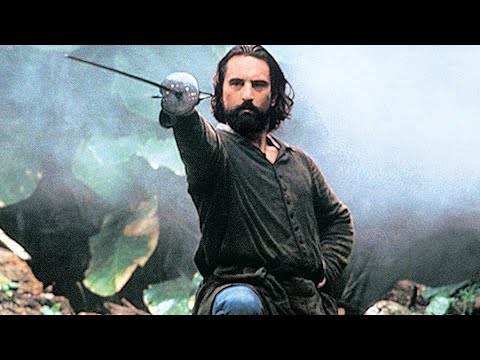
Roland Joffé (1986). 'The Mission'

Rob Lemkin (2020). 'African Apocalypse'