The North Face | 'Wherever You Go, We Go.'

Messaging (allusions): the outdoors as 'experience' (which is accessible through the 'The North Face' product/brand). The ad uses a visual 'magnification' metaphor, whose constant 'zooming-in' alludes to the idea of closeness e.g. of 'becoming intimately' connected; 'participation' rather than simply 'spectatorship' (that perhaps, the brand allows its consumers to 'traverse the divide between the desire to be active and the reality of being active') - implying, that 'you too can be here' (enabled by our brand/product-line).
In fact, the idea of 'becoming' also talks about the idea of 'transformation', which in the context of the ad implies that the consumption of 'The North Face' products enables you to (presumably, positively) 'transform'.
Through the tie-in between the voice-over commentary and the introductory scene - there is also a suggestion that the two protagonists have just arrived back from an outdoors experience - acting as a 'reply' to the ad's call-to-action statement: "Have you been there, in places no one should go?" (implying our/your response : 'yes, we've just arrived back, what about you?').
Additionally, the reference to 'solo' is (presumably) intentional in that it is part of the 'vernacular' i.e. it references the particular cultural context of the climbing (and perhaps, more generally, experiencing the outdoors). Importantly, the word strongly implies that the act of engaging with such experiences is one, which is done in unison with the 'The North Face' brand - that you are never 'soloing when you're wearing The North Face'.
Consider (Simon): while this is outside of the remit of the lecture series (and, coursework assignment), I find it interesting that the 'The North Face' brand name includes the 'definite article' 'the', which as this explanation of English usage states: "nouns in English are preceded by the definite article when the speaker believes that the listener already knows what he is referring to"
https://www.ef.co.uk/english-resources/english-grammar/definite-article/
implying that the ('The North Face') brand *must* be unmistakably known to the prospective consumer i.e. it asserts the (desired) significance of the brand.
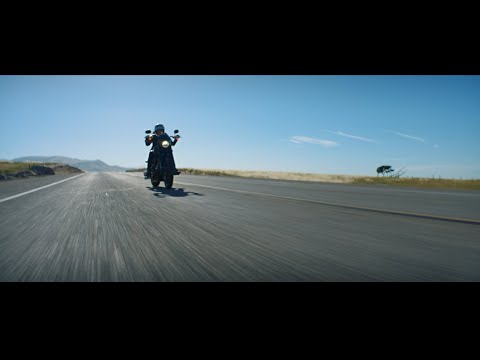
Harley-Davidson (2020). 'Magic Hour'
Transcript: "So, you're on this thing right. It's just, you in the road, and the wind, and the trees. And it fills you up. You're flying, but centred. Lost but found. Every part of your body is engaged, every part of your mind is activated; synapses is firing, dopamine using; its chemical. You get off and you feel reborn; a god. Your spine is tingling, your core is vibrating; and that growl hums in your belly for the rest of the day. Because a great ride stays with you; just lingers in your muscles and your bones and settles into your consciousness and seeps into the creases of your soul. Every hour is magic hour when you're on a Harley. But the magic isn't about what the bike can do, it's about what the bike can do you."
Messaging (allusions): Through comparing the act of riding a Harley-Davidson with spiritual experiences, the ad imagines the product as a device for transcending our everyday, human existence - riding a motorbike becomes a spiritual experience.
TheLastPlaceYou'llLook2 (25 May 2025). "StarScope 'Big Retailers Don't Want You To Have This' Ad"

Messaging (allusions): This is clearly a scam. The ad's messaging works through appealing to a prospective consumers' desires (for how the product might enable them to achieve their goals) and in doing so, uses rhetorical devices
[Wikipedia] which allow them to uncritically except the ad's hyperbolic claims. The ad seeks to appeal to socioculturally-located ideas, which have particular significance/meaning to such consumers e.g. ideas around 'military expertise' and the 'authority of science/engineering invention'.
Context: The following
https://www.youtube.com/results?search_query=StarScope Monocular e.g.
https://www.youtube.com/embed/67350MLGXXQ?start=27 includes videos, which are generally critical of the ad's adverting claims.
Transcription: The following includes a transcription based on YouTube's automatic transcription process. While useful as a guide, it is noted that the transcript likely includes some errors, which would need to be corrected if the work was to be cited subsequently.
Transcript: "Big retailers don't want you to have this zoom lens, but there's nothing they can do to stop it. So, there's this new super powerful monocular, and it's got the zooming power of a military sniper scope. It's already banned from Home Depot, Amazon, Walmart... all those big box stores for being too powerful. And now, the company behind it is cutting out the middleman, selling over 1.5 million units in the last month, all without those big retailers who just jack up the price tag.
What makes this powerful zoom lens unique is that it can be attached to your smartphone camera to make movie quality pictures and video footage. Now, this thing has been featured on Fox, ABC, NBC, you name it.
But here's the kicker - some folks are saying it could be banned soon. Why? Because the product safety committee thinks civilians shouldn't have access to something so powerful, something designed for military use. So, while it's still legal, people are scrambling to get their hands on one before any restrictions hit.
Originally, this was made for military use, essential for military sniper teams during recon missions in the toughest environments. And now, it's been adapted for us regular folks, it's called the Star Scope Monocular, and it's wild. Originally developed for the US Special Forces, this compact zoom lens lets you zoom in on stuff miles away. And the kicker, it takes photos and videos with this insane clarity, like those fancy DSLR cameras. It's using military-grade optics technology to magnify 30 times more than any other monocular out there. Stick it on your phone and you're shooting movie quality footage.
It's tough as nails, too. Waterproof, freeze proof, and can handle the desert heat. And man, the uses are endless. Whether you're hiking, stargazing, hitting up a concert, or even playing spy, this thing's got you covered.
Since hitting TV, they've sold 2 million units in the last 30 days. And get this, by cutting out the middleman, they can offer it at a much lower price without the extra markup. Lucky for us, the company behind Starscope is doing some market research and giving away their zoom lens to first-time buyers for 50% off in the US. Yeah, you heard that right. You can get it at half price today. Thousands have already jumped on this promo. Just fill out your shipping info and they'll send you the Star Scope at 50% off.
But remember, this is a limited time deal and stock runs out fast. Last time they sold out in under 3 hours, so why risk paying full price tomorrow when you can get it for 50% off today? Check it out ASAP. Click the button below or scan the QR code to grab yours at half price."
Example: The following ad (for a seemingly obvious sham/falsified product) 'NeoSocket / Fuel Shark Gas Saver'
[see] uses similarly deceitful messaging techniques as used here. In doing so, consider how it deploys messaging techniques used to communicate value about legitimate products such as the ad for the "Oral-B iO Toothbrush Heads: Change now and get back to 100% cleaning power"
[see] such as the 'authority of science/engineering invention' etc.
Related: DW Fact Check (5 July 2026). "How to spot fake AI ads selling unreal products"
https://www.youtube.com/embed/xT4D-CCBmB0?start=127
Oral-B iO Toothbrush Heads: Change now and get back to 100% cleaning power

Messaging (allusions): Oral-B iO Toothbrush Heads are innovative instruments of personal care whose users are unique because of their decision to use the Oral-B product.
Consider (Simon): This is an ad for a toothbrush, which centres its communication around the 'innovation' of its product (a replacement electronics toothbrush head). In doing so, it strongly implies (characterises) that its users are 'unique' (through a metaphorical association between the stated 'unique teeth' and an implied 'unique user' versus an assumed - and less special - 'generic user of generic toothbrushes'). The ad also implies that their product is superior to their competitors as a consequence of Oral-B's innovation - allowing it to be 'harder wearing' (and by implication, more 'efficient'). As it common with 'personal care' products, the ad uses imagery (lighting, colour palette, animated information diagrams etc.), which allude to the idea of 'medicalisation' i.e. that these things are hygienic/precise 'instruments' (and by implication, such instruments are specialised medical apparatus).
And so, such 'medicalisation' for example, acts as a 'frame' (as per Erving Goffman's frame analysis'), which anticipates that interpretations based on recognisable images, stereotypes, metaphors, actors, messages.
Note that 'Oral-B' is a Procter and Gamble Company (P&G) brand i.e. the messaging will be consistent with other brands owned by the same parent company - perhaps, review some other P&G brand ads - for example, P&G | Always 'Like a Girl' (2015)
[see]
TVC for La Vie est Belle by Lancôme | Feelunique
Unilever's Lynx Effect 'The Lift'
Royal Navy Recruitment (14 August 2025). 'Royal Navy Reserves - New members welcome'

Transcript: "Imagine a club like no other with locations all over the country and top-notch facilities that gives you access to new experiences and the latest tech where you're at the heart of the action wherever that may be. A club you can join just 24 days a year with no annual fees. In fact, we'll pay you. Royal Navy Reserves. New members welcome."
Messaging (allusions): the ad is designed to appeal to people who are interested in the excitement of a more changeable/frenetic lifestyle, who enjoy going to sports clubs/gyms (especially, ones with 'top-notch facilities') and who are enthusiastic about new tech such as virtual reality. The ad is narrated by a woman who moves through various spaces - implying, the idea of 'transformation' - where metaphorically, such navy recruits experience similar such transformation (presumably, from what they are - to something better). In doing so, the ad's 'call-to-action'
[Wikipedia] directs users to the following website:
https://www.royalnavy.mod.uk/careers/royal-navy-reserves (so that they can obtain the purported benefit).
Further to this: the NZ Police Recruitment ad entitled 'Freeze' (2017)
https://newpractices.co.uk/campaigns/#f9psILoYmCc makes similar allusions/uses similar means.
Cadbury (2018). "Mum's Birthday"
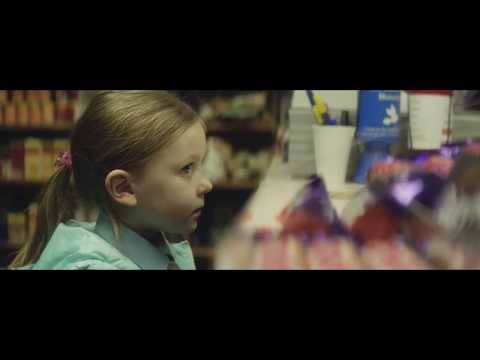
Synopsis: A young girl buys a block of Cadbury's chocolate for her mother's birthday at a British corner shop. The vignette is framed by a brief scene of the mother completing a shift at a service job.
Messaging (allusions): The mother is characterised using the 'everywoman' trope (presumably) to signify ideas of universality and 'honesty' (consistent with the cultural archetype, which locates working-class people as being more 'essential/honest/authentic' than middle-class etc.). The girl's naivety is similarly portrayed as 'honest' (and somewhat 'pure'). And the shopkeeper is portrayed as caring and benevolent. Together, the 'world of the story' depicted in the ad evokes a range of positive attributes, which are Cadbury's intend to have associated with their brand.
The ad can also be analysed more formally using the cognitive linguistics process of Conceptual Metaphor Theory (CMT) such as this example of a child's toy car driving on the motorway and criticism of the supposed 'wokeism' phenomenon i.e.
http://trigg.gr/t/72898 [folksonomy]
Bibliography: Mallinson Television Productions (MTP). (2019). 'Cadbury - Yours For 200 Years'.
https://mtp.co.uk/portfolio/cadbury-yours-for-200-years [video clip]
TVC for Harrods 'Endless Summer - Snapshots Of Style'
TVC for Jaguar Type 00 'An Original Work of Art'
Bitdefender (2025). 'They Wear Our Faces'
Enjoli (1982). 'Cause I'm A Woman...'

Point: the ad exemplifies the phenomenon known as 'gender coding' as an expression of and implied ideological perspective. In simple terms this tends to breakdown as either a perspective which understands gender to be something which is 'biologically innate' or something which is 'socio-culturally constructed' i.e. the product of our participation within culture.
The following archived tweets provide a salient illustration of how narrow definitions of 'gender-coding' become polarised - in this case, as part of a process of 'identity construction' where a subject creates artificial boundaries around aspects of culture, which they approve of and, those, which they don't.
Coded Femininity Over
Concept: "Among the categories and classes that make up the American mythic consciousness, there is one unique and exquisite, located in a special place next to the heart, the one called 'Marilyn.' Marilyn Monroe is our collective representation of that which is most feared and desired in America - unrepressed feminine sexuality, a sexuality which thrives outside of domestic arrangements. If anyone had dared to ask her 'What do you do for sex?' she would have answered in her sweet little rinky-tink voice, 'Whatever pleases me,' an innocent-seeming formulation, but when it comes to American values it is more powerful than the atomic bombs that were being tested in the Nevada desert precisely coincident with her career. She continues to proffer more light and dark sexual potential than can be squeezed from the 1980s kid's version of this same slow revolution, 'girls just want to have fun.' Marilyn's is the promise of a primitive/cybernetic sexuality in which all women are so constituted that all men might love them, in which everyone's personal computer is compatible with, can be hooked up to, can 'talk to,' everyone else's personal computer. Of course, this is the ultimate logic of humanity that both pre-dates and post-dates the moral formulations of agricultural and industrial societies, but Marilyn appeared in the 1950s, not exactly a propitious moment for an insistence on return to the Real" (MacCannell, D., 1987).
Bibliography: MacCannell, D. (1987). Marilyn Monroe Was Not a Man [Review of Marilyn: A Biography; Marilyn - Norma Jeane; Goddess: The Secret Lives of Marilyn Monroe; Marilyn in Art, by N. Mailer, G. Steinem, A. Summers, & R. G. Taylor]. Diacritics, 17(2), 114–127.
[academic source]
John Lewis | Christmas 2025

Messaging (allusions): (we're not so different you and I... a father who recognises that his son understands him better than he thinks - perhaps, inferring that John Lewis equally understands us/is like us)
Consider (Simon): some questions, which would be interesting to have answers to:
Why is this significant in terms of the ad's messaging?
What is the significance (symbolism) of the choice to give a 'vinyl' album/record (and not a digital recording)?
What does this choice infer about John Lewis?
The ad might logically be interpreted using 'frame analysis' and/or 'script theory/schemas'.
And so, to paraphrase Derek Bolen, the ad leverages the sociocultural knowledge (schemas) of an assumed consumer who brings to the ad an awareness, which is shaped by their prior experience, interaction and everyday observations; essentially, an understanding, which is sympathetic to the ad's messaging.
Additionally, the ad constructs a 'frame' (as per Erving Goffman's frame analysis'), which its viewers interpret through its presentation of a series of recognisable images, stereotypes, metaphors, actors, messages.
This ad's narrative reminds me of the McDonalds 'We all have McDonalds in common' ad, which Jack Hockaday hijacked here:
http://newpractices.co.uk/detournement/?rerouter=Jack_Hockaday The John Lewis ad focuses on a father and his son.
'The Australian Lamb commercial 2026'
Aviation American Gin 'The Process' (with Ryan Reynolds)
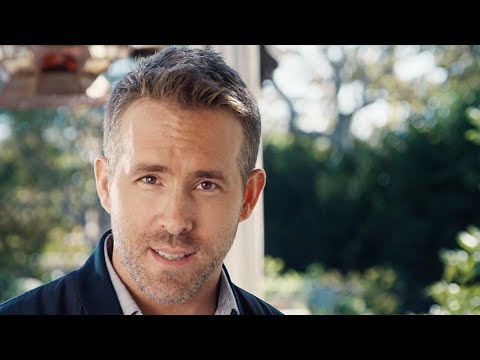
About: seemingly, the star of the ad Ryan Reynolds
[Wikipedia] is one of the owners of the product (as he mentions in his commentary + as per the transcript
https://www.manifestowriting.com/database/aviation-gin-the-process/ here). While the ad makes use of 'celebrity branding'
[Wikipedia] it does so quite playfully, through Reynolds' explicit mention/identification as a Canadian (where it seems to be implied that the ad's audience are American?). This reference is further underlined through mention of the well-known Canadian singer-songwriter Sarah McLachlan.
[Wikipedia] The ad's playfulness also extends to its casting/styling of actors who all appear to be Hipsters.
[Wikipedia]
Consider (Simon): as a way of defining/interpreting the discrete features of this ad, I would review some others - both gin ads
[see] and ads for premium spirts e.g.
https://greatdrams.com/25-amazing-whisky-adverts/
Messaging (allusions): the ad seeks to project ideas about 'authenticity' while simultaneously including intertextual references, which logically run counter to this. The cliché of the diligent/over-earnestness connoisseur (common to whiskey and premium wine products) for example - whose allusions commonly reference ideas of quality - also risk being interpreted as being overly 'elitist'. And so presumably, the tone of the messaging and Reynolds' playful mocking
[thesaurus] is intended to appeal to a prospective consumer who might be less appreciative of such connotations - perhaps, one who is younger - that is similarly mocking of such assumed pretension (pretentious/pompous/affectedness); that he is 'tipping his hat' to (acknowledging) an 'alternative subculture'
[imdb]
In this sense, the ad seeks to engender a sense of 'identification' with the brand - one, where its prospective consumers might feel a sense of 'belonging' - that 'the brand is them' (that it embodies aspects of their identity). This is a strategy commonly used in premium brands for example, think of how Rolex seeks something similar (although using a different messaging approach)
[see] as well as Rolls-Royce
[see] and Prada
[see] etc. where in the case of such brands - it is the desire to incorporate ideas of 'superiority' into your identity. Whereas in the case of the Aviation American Gin (AAG) ad - it is sense of belonging, which prospective consumers might have, through their process of recognising Reynolds' 'in jokes' - symbolically, aligning themselves to Reynolds' public persona and the gin, which he's promoting.
And so, it is the 'sign-value' (as Jean Baudrillard might describe it), that
AAG are seeking to engender through the ad's messaging. Or put more plainly, if the ad isn't about sign-value then what is its 'use-value' i.e. what 'problem' does the gin solve as communicated through the ad's messaging? Compare its messaging to this
[see] and
[see] whose value is a consequence of their utility.
Rolex 'Icons' (2013) campaign featuring Roger Federer
TVC for Coca-Cola: 'Make It Happy'
The Coca-Cola Company "I'd Like to Teach the World to Sing (In Perfect Harmony)
Coca-Cola (2009). "Open Happiness"
Background: [Wikipedia] [trade magazine]
"Myth does not deny things, on the contrary, its function is to talk about them; simply, it purifies them, it makes them innocent, it gives them a natural and eternal justification, it gives them a clarity which is not that of an explanation but that of a statement of fact" (Barthes, p.143, 1972).
Bibliography: [pdf]
Confused.com: 'Just Used Confused | Dad'
Confused.com: 'Just Used Confused | Wife'
Disney | 'A Disney Holiday Short: Best Christmas Ever'

Messaging (allusions): the ad casts Disney as the 'makers of magic' - able to make manifest children's desires - whatever they may be. It does this through (leveraging cultural myths around 'childhood imagination') alluding to the idea of the 'creation myth' - I'm reminded for example, of the Classical Prometheus myth of the creation of life from clay
[Wikipedia] except, in the case of the Disney ad, it's a children's hand drawn illustration (which becomes an animated creature through the 'magic' of Disney) - a creature born from 'childhood imagination'. And then, as consistent with such 'creation myths' (whose logic often points to the consequences of 'meddling with the natural order of things') - such 'transformational magic' is inevitably problematic/incomplete (think of the tale of Frankenstein's Monster). This is manifest in the Disney ad as a creature, which was 'born' without a mouth - prompting, the second act of the ad's narrative, which pivots around the creature desiring (and then receiving) a mouth - as wished for (desired by) the ad's child-protagonist (because of course, 'Disney makes magic happen').
Consider (Simon): although this is beyond the scope of this current assignment (centring on the criticism of adverting messaging), the following short films present interpretations of the idea of the 'creation myth': 'The Wooden Leg' (Darren Doherty & Nick Smith, 1994):
https://newpractices.co.uk/animation/#R1FB01ePHyo And 'Kitchen Sink' (Alison Maclean, 1989):
https://newpractices.co.uk/shorts/#pcfSiDzBJF8 Note that you can watch a high-quality version of this here:
https://www.kanopy.com/en/bournemouth/video/333551
Confused.com: 'Just Used Confused | Neighbour'
Gatorade | '23 vs. 39' Michael Jordan vs. Jordan (2003)
Publicis Worldwide (2017). Nescafé Gold: 'Those Few People'
(2017)
About: "The campaign titled ‘Those Few People’, created by Publicis London and Publicis Conseil, focuses on why it is important to spend moments with the ones we care about. ... The campaign aims to drive home the message that we'll each meet around 80,000 people in our lifetime but only a few will be really special to us. We don’t often get a chance to make that many truly meaningful connections, so the ones we do manage to establish are worth making and effort and holding onto."
[trade magazine]
Sephora: The Unlimited Power of Beauty
IF Skadeforsikring (2002) tvc
Jeremy Allen White Calvin Klein

Messaging (allusions): Calvin Klein makes you cool. You can do anything (even climb on rooftops). It alludes to the idea/visceral (embodied) feeling (and ideas of self-image) of being powerful, happy, cool, strong, sexy.
Question: who do you think the audience (prospective consumer) is for this ad? It could be the consumer of the product i.e. men who wear men's briefs or perhaps their partner i.e. someone who would like their partner to have/get the attributes, which the ad associates with Jeremy Allen White (and which are conferred to White through his celebrity persona) i.e. his 'sign-value'. And so, the value, which the Calvin Klein ad seeks to communicate (to its prospective consumers) is consequent upon a set of cultural associations, which the ad's audience are aware/knowledgeable of and which have significance/meaning for them - making them desirable.
More: To add (Eve T): The use of an attractive celebrity will appeal to women. This is because whilst the advert is selling boxers to men, it is likely that the buyer of the product is likely to be a mum, girlfriend etc and therefore this actor may appeal more to them.
Consider (Simon): good observation - I think you're right, the ad likely targets mens' partners (who are compelled/drawn-in by the prospect of dressing their boyfriends).
Consider (Simon): the ad
[imdb] somewhat objectifies its protagonist through showing him strip for the clip's unseen but assumed audience. In this sense, the act of watching the ad/him is voyeuristic (scopophilia ?) - in that, the audience has power, which the protagonist doesn't (we can watch him but he can't watch/see us). Interestingly, the ad somewhat flips the expectation that only women can objectified (as per the feminist theory of 'the male gaze'). In this sense, the ad is about pure visual spectacle - the pleasure of watching masculine beauty - or at least, a particular version of it.
Here is a hijacked Calvin Klein ad from a few years ago (where the source ad seems much more overt in its alignment of the brand with masculinity/sexuality)
http://newpractices.co.uk/detournement/?rerouter=Sam_Bampton
Quote: this might possibly be useful here e.g. "By adopting a Foucauldian perspective on the body and subjectivity in contemporary consumer culture, as well as considering the possibility of a ‘gay gaze’ in visual culture, this thesis suggests that the continued sexualisation of the male body in mass media has eroded the categorical boundaries separating heterosexual and homosexual men" (Lee, K.-Y., 2020).
Observation: The ad stars Jeremy Allen White
[imdb] who was presumably, cast because of his celebrity status (?) - if so, perhaps the approach here might fall within the category of 'celebrity branding' - similar to the 'Rolex with Roger Federer' ad:
[see] (where the brand is ascribed attributes of the celebrity through their association).
The ad's soundtrack uses the following: Lesley Gore (1963). "You Don't Own Me" i.e.
[Wikipedia] (presumably, because of the tone of the song + its lyrics).
More: To add to this (Eve T): The use of the song may be an intertextual reference to the film Fifty Shades Of Grey (2015), as this song is commonly associated with this film.(after looking into this further I have realised that the song does not feature in the film, but is associated with the film). In addition, it can add to the point of 'sex sells' due to the commonly known raunchy film. It is a common misconception that this is used in the film however after further research I have realised it isn't.
Consider (Simon): I wasn't actually aware of this reference (I never really got around to seeing the film) however, this seems like a really plausible explanation i.e. that it was an intentional move by the ad-maker to reference the film - which in doing so, is about 'framing' (as per Erving Goffman's theory) the ad in reference to the film i.e. you could argue that in this way, the ad 'frames' the Calvin Klein briefs/boxers in terms of the Fifty Shades Of Grey (2015) film (alluding to/setting up expectations) about the briefs. And doing so, metaphorically transfers properties from the film to the briefs - implying (to the prospective purchasers for the briefs) that the wearer will be similarly sexy (becoming the protagonist in their own 'Fifty Shades Of Grey'). If you were to argue this then you'd ideally point to specific features within the two texts (using the shared soundtrack as your initial justification for the comparison). And, ideally looking out for visual references, which you could include in your essay as side-by-side comparisons - inserted into your essay as 'figures'.
Note: There appears to be a longer version of this ad here (which can be downloaded by control/right-clicking the embedded clip)
[trade magazine]
Bibliography: Lee, K.-Y. (2020). "Homoeroticism in contemporary fashion advertising". In aaltodoc.aalto.fi.
https://aaltodoc.aalto.fi/items/2f90fad2-a726-4efc-9b1e-d7f5350a15e6
Zoopla | "Nana's Cottage" (2022)
Coco Mademoiselle by Chanel
Bumble 'Fall in Love with Dating'
'Life Is Easier On iPhone' campaign (2017)
About: "Apple has created a series of 15-second social spots to promote its Life Is Easier On iPhone campaign, which highlights how and why smartphone users should make the jump to an iOS handest. A total of eight ads have been created, each featuring a split screen depicting the difference between ‘Your Phone’ and ‘iPhone’."
[trade magazine]
Google: 'Hey Mom' (2019)
Newport Cigarettes (circa 1966) tvc

About: a commuter/passer-by becomes interpellated while waiting for their bus.
Messaging (allusions): the ad imagines a reality divided/bifurcated/stratified into a 'leisure (upper/middle) class' and a 'working class', where the latter are cast as desiring onlookers - looking onto the former's apparent, carefree lifestyle. Importantly, it is the consumption of the product (Newport Cigarettes), which provides the means (enables) prospective consumers (such as this commuter/passer-by) to momentarily transcend such a divide; for the so-called 'worker' to feel what it means to be carefree.
Argument: to understand this in terms of 'interpellation', you could say that Newport Cigarettes are seeking to 'hail' (interpellate) the commuter/passer-by, which through the commuter's recognition of the ideology (world-view) being projected by Newport Cigarettes - causes him to become interpellated i.e. his ideology becomes that of Newport Cigarettes. This for example, results in the commuter (fatalistically) taking-on/accepting his social status as 'worker' and that the divide, which separates him and the so-called 'leisure classes' is immutable/natural/preordained.
'interpellation' (Louis Althusser) e.g.
https://people.southwestern.edu/~bednarb/su_netWorks/projects/jjackson/index.html
The new BMW 1 Series

Point: the ad shows a group of people socialising with each other while they drive their new BMW 1 Series car.
Messaging (allusions): the ad's call-to-action is: 'sheer driving pleasure', which it seems to interpret through foregrounding ideas around youth and friendship, which the ad's messaging seeks to align with the functional simplicity of the BMW '1 Series' product (and more generally, the BMW brand). For example, the use of remote-control / autonomous parking feature is shown to be easy to use (possibly, ideas around being liberated/freed of the complexities of parking). In this sense, the ad could be interpreted in terms of the idea of 'conspicuous consumption', which is commonly attributed to the work of Thorstein Veblen (i.e. perhaps, look for papers referencing his ideas/theory). In doing so, the actual BMW (and the behaviours of its inhabitants such as them videoing each other while they listen to music and share photos etc. are actions, which have no direct connection to the functional purpose/utility of driving a car), instead, they point to its 'sign value' (as per Jean Baudrillard) of the brand/product (as opposed to its 'use value' of driving from A to B etc.). In this sense, the ad seeks to project values ('cultural associations'), which its prospective consumers invest in the BMW brand/product i.e. cultural associations, which are not intrinsic to the product but, which are applied to the brand/product by its prospective consumer i.e. it is BMW's prospective consumers who give the product/brand its value (which is separate/distinct from qualifications about its design/engineering etc.). And of course, such values are understood by the BMW's prospective consumers through their participation in culture i.e. the ad presents a 'frame' (as per Erving Goffman's frame analysis'), which has particular significance for such consumers - cuing their interpretation of the ad's messaging i.e. they appreciate the value of the BMW brand/product through their cultural awareness of its sign value. It is an appreciation, which is understood/recognised through references in culture i.e. intertextual references/associations (as per Julia Kristeva's concept of intertextuality).
Consider (Simon): the following car ads and how each uses messaging to communicate value around their respective products/brands (and how these reflect back on your understanding of this BMW ad):
[see] [see] [see] [see] [see] [see] [see] [see] [see] [see]
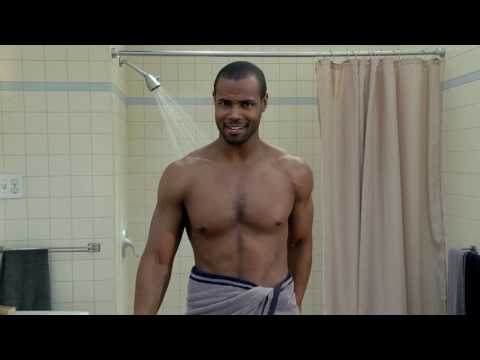
Old Spice | 'The Man Your Man Could Smell Like'
Kohler Co 'Whale' (2009)
TVC of Lyndon B. Johnson (1964) 'Daisy' presidential campaign ad
'Thinksafe' Campaign from 1990s-2000s for New Zealand Accident Compensation Corporation | 'Fruit - E - Bars'
Rolls-Royce Ghost Series II. No Ordinary Power
TVC for British Airways (1989)
Empress 1908 Gin 'Splash of Color'
Ajax Cleaner (selling product 'use value' rather than 'sign value')

Point: Jean "Baudrillard claims, commodities are not merely to be characterized by use-value [as is the overt focus of the Ajax ad] and exchange value, as in Marx's theory of the commodity, but sign-value — the expression and mark of style, prestige, luxury, power, and so on — becomes an increasingly important part of the commodity and consumption (see [Robert] Goldman and [Stephen] Papson 1996).
[Worldcat]
From this perspective, Baudrillard claims that commodities are bought and displayed as much for their sign-value
[Wikipedia] as their use-value, and that the phenomenon of sign-value has become an essential constituent of the commodity and consumption in the consumer society. This position was influenced by [Thorstein] Veblen's notion of 'conspicuous consumption' and display of commodities analyzed in his Theory of the Leisure Class
[Wikipedia] that Baudrillard argued has become extended to everyone in the consumer society. For Baudrillard, the entire society is organized around consumption and display of commodities through which individuals gain prestige, identity, and standing. In this system, the more prestigious one's commodities (houses, cars, clothes, and so on), the higher one's standing in the realm of sign value. Thus, just as words take on meaning according to their position in a differential system of language, so sign values take on meaning according to their place in a differential system of prestige and status."
[encyclopædia]
Dove (Unilever) 'The Beauty Report Card, #StopTheBeautyTest' (Hindi)
Toyota Hilux 'Bugger' Saatchi & Saatchi Wellington (1999)
Fiat 500 S 'Tested For Bad Boys' (2017)
Stihl Chainsaws 'Bequeathed' by DDB NZ (2009)
Coca-Cola 'New Coke' + Stranger Things S3 (2019)

Context: "The launch of 'New Coke'
[Wikipedia] 40 years ago, in 1985, is one of the most famous case studies in the world of branding and marketing. It is also one of the biggest mistakes made by a big consumer brand, with many lessons to learn from.
On April 23 of that year, The Coca-Cola Company decided to change the formula of its most popular drink for the first time in 99 years and launch it as 'New Coke'. The objective was to regain market share in the US and in the cola category – especially against Pepsi – but things didn’t go as planned.
The backlash from consumers was so huge that the company had to go back to the original Coca-Cola formula" (Andrivet, M., 2025).
Concept: "Personal nostalgia encompasses a longing for the lived past (Merchant, LaTour, Ford, and LaTour, forthcoming). Vicarious nostalgia on the other hand, 'deals with nostalgia for a period outside of the individual's living memory' (Goulding, 2002, page 542) that was never directly experienced by the consumer (Baker and Kennedy, 1994). Vicarious nostalgia, also referred to as historical nostalgia, examines the experience of emotionally connecting to and fantasizing about experiences and associations from past eras (Stern, 1992)" (Merchant, A. and G. M. Rose, 2013, p.2620).
More: Lucas Sinclair (Caleb McLaughlin) defends 'New Coke' in Stranger Things S3E7 ('Chapter Seven: The Bite')
[imdb] https://www.youtube.com/embed/xe3GjCgVUdM [commentary]
Related: crossover/cross-promotion
[Wikipedia] between Stranger Things + 'Hawkins Fried Chicken' (KFC)
[see]
Bibliography: Merchant, A. and G. M. Rose (2013). "Effects of advertising-evoked vicarious nostalgia on brand heritage." Journal of Business Research 66(12): 2619–2625.
[academic source]
None, D. T. J., None, D. V. K. M. & None, M. D. K. (2025). 'Digital Nostalgia Marketing: How Past-Centric Ads Affect Gen Z Consumption'. Advances in Consumer Research, 2(4), 4279-4291.
https://acr-journal.com/article/digital-nostalgia-marketing-how-past-centric-ads-affect-gen-z-consumption-1527/ [pdf]
Andrivet, M. (2025). 'New Coke: A Classic Branding Case Study on a Major Product Change Failure'. The Branding Journal.
https://www.thebrandingjournal.com/2025/02/new-coke/
Toyota NZ Everyday People (1998)
(cultural myths around shared cultural values/identity)
New Zealand hardware store "Mitre 10 - You're Dreaming" (2012)
Aster Aadhar Hospital | Aster Mothers Day 2023
TVC for Jaguar 'Copy Nothing | Delete Ordinary' campaign
The Guardian (1986). 'Points of View' TVC

Messaging (allusions): The ad uses a metaphor about a 'picture in parts', which when its metaphorical pieces are combined, form a discernible whole (akin to someone completing a jigsaw puzzle). The metaphor is told through a narrative about a skinhead
[Wikipedia] who saves the archetypal 'man on the Clapham omnibus'
[Wikipedia] from being crushed by a load of bricks, which are seemingly in the process of being hoisted to the building construction above. In it, multiple perspectives i.e. metaphorical 'picture parts' are shown - each depicting different perspectives on the same scene - two viewpoints, which offer up plausible but incomplete interpretations (constrained by the limitations of their vantage points); and a third, objective (seemingly omniscient) point-of-view, which the ad claims The Guardian has particular authority over i.e. that the newspaper has access to the the metaphorical 'discernible whole' and so, the truth, which it tells is therefore, absolute and incontestable. Note that by inference, the truth, which other news sources provide is necessarily only partly true - constrained by their respective, limited vantage points.
About: discussion about this ad and the contemporary state of the advertising industry
[LinkedIn]
Related: The Guardian's ad was played out in reality in 2020 when Donald Trump shared the following clip, which CNN labelled as 'manipulated media'
http://trigg.gr/t/21267
Media: additional version of The Guardian ad
[channel] [video clip]
Bibliography: Swainger, H. (2016, March 1). 'Television adverts'. The Guardian.
[digital archives]
Allen, T., & Paul. (2020, June 17). "My Most Immortal Ad: Toby Allen & Paul Weiland Dissect The Guardian’s 'Points of View'" | LBBOnline. Lbbonline.com; Little Black Book.
[trade magazine]
Westpac (Australian bank) tvc
Sunkist Growers

Transcription: The following includes a transcription based on YouTube's automatic transcription process. While useful as a guide, it is noted that the transcript likely includes some errors, which would need to be corrected if the work was to be cited subsequently.
Transcript: of supposedly a Sunkist grower called Roger Palmer voluntarily extolling the virtues of the Sunkist brand/product: "I've grown up with that label - I've no none other. I've done what my ah... great-grandfather started out doing, it's ah - a tradition in our family to grow good oranges. And I think it may be difficult to raise good oranges but it's easy for you to choose them. Read the label."
About: seemingly, the ad was created by the advertising agency Foote, Cone & Belding (FCB) as part of their "read the label" campaign (originated in 1976). Seemingly, the ad was produced/aired in 1988 (as mentioned in the title of the following):
https://www.youtube.com/embed/o6XAiiffOTs (and alluded to in this version):
https://www.youtube.com/embed/TNP2xPlWcW4 More historic Sunkist ads here:
https://www.youtube.com/results?search_query=Sunkist Oranges Commercial 1988
Stranger Things + 'Hawkins Fried Chicken' (KFC)

About: "KFC has teamed up with
[Wikipedia] Stranger Things for the Netflix show’s fifth and final season, launching a full-scale crossover that turns the brand into Hawkins Fried Chicken.
Created by Mother, the campaign leans into the show’s 80s nostalgia and small-town heroism, complete with a cinematic spot that follows a crew of HFC staff battling chaos in the rift-torn town to deliver chicken when it’s needed most" (Houston, A., 2025).
[trade magazine]
More: "Social-first agency, Uncovered, has launched a social campaign for KFC UK&I's partnership with Stranger Things, supporting Mother London's campaign that transformed the brand's iconic bucket and logo into Hawkins Fried Chicken.
Following the recent KFC x Stranger Things A/V launch, Uncovered was tasked with building relevance on social-media with existing and core KFC audiences, with a focus on amplifying the partnership further to younger consumers. The campaign aims to mobilise the thriving KFC community built over the past year to trial the new Stranger Things products.
Wrapped in a playful '80s VHS aesthetic that calls directly back to the tone of Stranger Things, the campaign shows the breadth of what is actually possible on social; seamlessly jumping from immersive VFX work to creator partnerships to trending formats to entertainment-first executions that support IRL activations across the entire UK" (2025).
Production: Mother is an "independent creative companies. We started around one table with three people, all of whom shared the washing up. 26 years on, Mother has offices in London, New York, Los Angeles, Singapore, Shanghai and Berlin."
[LinkedIn] https://www.motherlondon.com/ [Wikipedia]
Bibliography: Houston, A. (2025, November 11). 'Ad of the Day: KFC becomes Hawkins Fried Chicken in Stranger Things crossover'. The Drum.
[trade magazine]
'Uncovered Heads to the Upside Down for KFC x Stranger Things Partnership' | LBBOnline. (2025, December 17). Little Black Book.
[trade magazine]
Cripps, C. (2025, December 31). "Best 'Stranger Things' Brand Collabs: How Hawkins Became a Marketing Platform". DesignRush.
https://news.designrush.com/best-stranger-things-brand-collabs-hawkins-marketing
The National Bank NZ (1989) 'seize the day' [carpe diem] Vivaldi's Four Seasons
Listerine ( 1950s)
Consider (Simon): the ad presents a 'frame' (as per Erving Goffman's theory), which would have (presumably) aligned with the socio-cultural and gender assumptions (prejudices, stereotypes) of the time when the ad was made/broadcast. These assumptions are obvious now because of their departure from our contemporary assumptions.
Dettol UK
7Up 'Chinese Science-Fiction Viral' (2011)
Intermarché: 'Le Mal-Aimé [Unloved Wolf]' (2025)

About: https://www.animationmagazine.net/2025/12/intermarches-animated-holiday-ad-featuring-a-vegetarian-wolf-wins-hearts-around-the-world/
Messaging (allusions): the ad's narrative is broken up into three key sections: an introductory and a concluding section, which work together to book-end a central animated, story section. The ad's narrative pivots on the relationship between the two central male and female characters (parents?) and a young boy (their child?). The animated section seems to serve partly as an allegory (about belonging, friendship and togetherness) and as a device for externalising the adult male's creative imagination and love and caring for his child. And through this, provides a window-into his (thoughtful, gentle) character, which the adult female character is shown to value/respect/admire. These attributes are then transferred via inference onto the Intermarché brand - communicating ideas around the importance of a caring family who have been brought together through their consumption of the supermarket produce/items over the festive season.
Presumably, the decision to use the Claude François song 'Le Mal-Aimé' (1974) as the ad's soundtrack
https://www.youtube.com/embed/ovfMOv-Zm0s is tied up in some cultural significance (nostalgia) for the ad's intended, French-speaking audience (in addition to its family-friendly, gentle tone)?
VW Polo Singing Dog (2012).
Procter & Gamble | Always 'Like a Girl' (2015)
Subaru Solterra EV 'Dog Tested'

Text: the ad follows a stereotypical family in a family car but in the form of dogs. At the end it specifically says "Dog tested. Dog approved".
[trade magazine]
Hijack: I have the idea to transform its meaning and message to become "Do not let your dogs drive cars" by editing it with an infamous PSA about speeding and its consequences. Unsure whether this would count towards "mocking" Subaru and its brand.
Messaging (allusions): the ad uses 'paradigmatic substitution' e.g.
[Instagram] where human drivers have been switched out for dog drivers. In doing so, the ad does what the cognitive linguist George Lakoff explains here as 'breaking the frame' (where, within the context of Frame Analysis):
https://www.youtube.com/embed/S_CWBjyIERY?start=94 In this case, the shift (from humans to dogs) foregrounds the precept that driving a car (normally) requires some level of expertise - precluding animals from doing so. And so, such a shift transfers attributes from 'a car requiring no expertise' onto the Subaru 'Solterra EV' model - casting it as a vehicle, which you could imagine having a slogan such as 'the Subaru Solterra EV is so easy to drive that even dogs can do it'.
And, as you say, the ad also plays on the 'cultural myth' (archetype, trope) of the 'nuclear family'
[Wikipedia] - perhaps, seeking to foreground the idea of 'normality', which in this case - has been 'shifted' because of the Subaru Solterra EV i.e. that it is both normal/conventional (and so, not scary) but also not normal through (not running on fossil fuel) and being an electric vehicle (EV). The ad also presents a 'frame', which also talks about the idea of 'unquestioned convention' about the relationship between such family and 'their family car' - as if the two (family + cars) are unquestioningly synonymous i.e. 'natural'.
Shreddies: 'knitted by Nanas' (2007)

Production: [trade magazine]
Messaging (allusions): the ad a magical/fantastical factory of nanas knitting Shreddies... Yeah right, the advertising strategy presumably sought to add interest to an otherwise pedestrian product. In doing so, the ad makes a number of positive associations about Shreddies.
Question: what are these?
And, why would this be useful in terms of communicating value (about the Shreddies product)?
Consider (Simon): the ad works by constructing a 'frame' (as per Erving Goffman's frame analysis'), which its viewers interpret through its presentation of a series of recognisable images, stereotypes, metaphors, actors, messages.
Question: what are these? - list them.
Messaging (allusions): Old age mythologised in terms (measurable, testable) 'usefulness' (explicitly, measurable utility) i.e.
[Wikipedia] Essentially, casting those members of society who are 'productive' as valuable and those who are 'unproductive' as useless. In fact, the opening shot of the factory feels slightly evocative of the Victorian workhouse
https://www.historic-uk.com/HistoryUK/HistoryofBritain/Victorian-Workhouse/ i.e. an institutional means of dealing with the vulnerable such as old aged people. Also, see some of the points in relation to ways of engaging that are "instrumental/procedural/transactional" as above - they make different points however, the impetus/ideology is similar (namely in terms of the assumption that our 'worth' is quantifiable in finite terms):
[see]
Partnership for a Drug-Free America (PDFA) (1987). 'This Is Your Brain on Drugs'
NEO Gamma Robot

Text: the ad appears to be for the company/brand '1X Technologies' i.e.
https://www.1x.tech/about whose mission seems to be about creating "general-purpose robots capable of performing any kind of work autonomously". The ad is for their 'NEO Gamma' product.
Messaging (allusions): the ad is for a 'domestic servant'
[Wikipedia] in autonomous, robotic form; a vassal who shows unquestioning obedient/allegiance to their assigned 'master'. They are a 'home helper' (house keeper/cleaner), whose impact on the home environment etc. is cast as being both benevolent and positively neutral (non interventionist). It is a robot, which is seemingly at home in an equally neutral (I'd say bland) modernist home (which is presumably, not even a real home i.e. some sort of 'show home'). Notably, the ad makes allusions to a 'techno-utopian' vision of the future i.e. one whose enthusiasm is largely uncritical of the potential consequences of technological change (as if the adoption of new technology is always wholly benevolent or at worst, benign).
Philosophically, the concept of 'neutrality' is quite dated - it reminds me of common rhetoric, often expounded in computer science fields around 'customisability' (user-defined options/settings etc.) i.e. where such users bring purpose to the ever-ready/waiting tool. In this sense, the design (both physical and presumably, aesthetic/experiential) comes out of a logical-analytical worldview common to engineering. Plus, the interior design depicted in the ad seems to be inspired by a 'minimalist aesthetic' (commonly described as the 'International Style' i.e.
[Wikipedia] ), which it combines with symbols of 'middle class' affluence (the wall art, wine drinking, yoga pose, seagrass washing basket, digital working and 'rain chains' i.e.
[Wikipedia] instead of downpipes for roof water drainage). In this sense, you could say that such a robot has most likely been designed in terms of ideas of 'instrumentality'; it has been designed to 'solve explicitly defined problems' i.e. 'tasks' (they are 'task oriented'). It is a thing whose operation contrasts that of humans i.e. it has no comprehension (need) of things, which might be uncertain, indistinct, unclear. And so, you could say, that the actual use (and prospect) of such a robot being installed in your house - presents a 'frame', which cues its users to negotiate (understand, interpret and engage with) their domestic environment in quite a instrumental/procedural/transactional way (the obverse of how people normally cohabitate together through engaging with each other and their surrounds through the nature of their embodiment). The problem then is the robot's non-humanness i.e. its neither a device such as a washing machine/fridge etc. nor a friend/partner etc. - it's a 'animate thing' - somewhat, a monster whose monstrosity stems from it being in-between (human and non-human machine) - perhaps, and example of the 'uncanny valley' phenomenon
[Wikipedia]
Importantly, all this is given significance through the ad's messaging (as per the remit of the assignment). Notably, the 'NEO Gamma' product/brand is largely unknown and so, such messaging must make reference to concepts, which sit outside of the product/brand as they have meaning/purpose for the product's intended consumer (such as sci-fi films etc.). For example, compare this to brands such as M&S, whose messaging will always tie it to a consumer's existing awareness. Actually, who is the audience for the ad's messaging - perhaps, the ad was created to get interest from potential investors in order to secure R&D / investment funding and not to create a product for an end user/consumer?
Also note the named brands, which appear in the ad such as Smeg and possibly, a Dyson cordless vacuum.
NeoSocket / Fuel Shark Gas Saver

Criticism: "FuelShark, also called car fuel saver or economizer, is a miraculous device that claims to save 20% or more of fuel. Just plug it into the cigarette lighter socket of your car and you magically save 20% of gas. It also saves oil, battery life and environment and even increases the power of your engine! This is what the sellers claim. In reality, this is just a tiny 1000uF capacitor (rated 25V) connected in parallel with car mains. Fortunately there's also a 2A fuse. There's also an indicator LED with two 1k resistors in series (they could have used one) and a 1.5M discharging resistor. I have no idea how this is supposed to save 20% of your fuel and why the car manufacturers don't put this already into all cars :). But at least, this is a nice flashlight and it tells all passengers that you are an expert :)."
https://www.youtube.com/embed/oLRfOvYEGiI
More: NeoSocket teardown
https://www.youtube.com/embed/KUGp1u8vfm4
Related: 'OBD2 fuel saver' teardown
https://www.youtube.com/embed/XgXwfBTKLGU?start=20
Example: The following ad (for a seemingly obvious sham/falsified product) TheLastPlaceYou'llLook2 (25 May 2025). "StarScope 'Big Retailers Don't Want You To Have This' Ad"
[see] uses similarly deceitful messaging techniques as used here. In doing so, consider how it deploys messaging techniques used to communicate value about legitimate products such as the ad for the "Oral-B iO Toothbrush Heads: Change now and get back to 100% cleaning power"
[see] such as the 'authority of science/engineering invention' etc.
Jimmy Choo | I WANT CHOO Fragrance
Messaging (allusions): instead of seeking to it to communicate value around a product this ad seeks to present a world, which is assumed to be attractive/desirable for its prospective consumers - the ad seeks to sell a lifestyle (an aspiration).
Consider (Simon): this could logically be discussed in terms of Jean Baudrillard's theory of sign value i.e. that in fact, it is what Jimmy Choo's fragrance 'signifies' (means) for their target consumer - rather than the mere 'functional value' of any such perfume.
Barbour and Sons Ltd | 'Wallace and Gromit Christmas Barbour Advert' (2025)

Meaning : Everyone needs a Barbour scarf for Christmas, even Wallace and Gromit bought it for each other.
Messaging (allusions): the ad presents a version of the family Christmas cultural myth/archetype (of 'the notion of family', 'gift giving', 'considered, personal reflection', 'authenticity' etc.) centring on the Wallace and Gromit characters, which true to the expectations of their (caricatured?) characters. In doing so, the ad contrasts the 'mannered' (bumbling, eccentricity, contrivances?) behaviour of Wallace (overtly manifest through his flawed 'Gift-o-Matic'
[trade magazine] device) and his 'authentic' (anthropomorphic) dog (who we know from previous episodes, has learnt to 'live with' his master's idiosyncrasies). In this way, a contrast is established between the 'mannered' Wallace + 'Gift-o-Matic' and the 'authentic' Gromit + Barbour branded product (scarf) - which seeks to imbue the Barbour scarf (and through connection/inference, the Barbour brand more generally) attributes around authenticity. For example, you could imagine a tagline for the ad going something like: Christmas is for sharing with the ones you love (underlining the Christmas cultural myth of authenticity) - forget what other people expect (criticising over-contrivance e.g. 'performing for the sake of performing') - just do what comes naturally (authenticity, which is in keeping with cultural myths around Christmas).
Question: if this is the case (as above), what are the key moments in the ad where these ideas are communicated?
Consider (Simon): the contraptions, which feature in Wallace and Gromit partly draw inspiration from the British illustrator Heath Robinson (who is a bit of a cultural institution
https://www.bbc.co.uk/news/magazine-27813927 for his whimsical contraptions). For example, "some of the contraptions in Wallace and Gromit’s The Wrong Trousers are based on a scale model of a gadget filled house"
https://theartssociety.org/events/cartoons-and-contraptions-wonderful-world-w-heath-robinson-1 There are parallels with the US illustrator Rube Goldberg
[Wikipedia]
Prada | Holiday 2021 collection in 'A Midwinter’s Night Dream'

Meaning: A chosen family of sophisticated friends coming home
Shifted: Be prepared, dress for the weather, Christmas is a time to be with real family
Text: the ad shows a group of four seeming acquaintances whose fate ("like kismet" as per one of the lines of dialogue) has seemingly, thrown them together - perhaps, in a (techno-utopian, Northern Hemisphere) future, which has somehow managed to adapt to climate change - where (presumably) the climate has changed so much, that snow is longer cold (allowing people to walk through it in their everyday clothes). The (assumed to be) group of 'cool people' wander through a snowscape - (almost aimlessly and without any urgency) only to arrive at a dramatic cityscape (seemingly, incidentally).
Narratively, I'm really not sure what this ad is about - but presumably, this is part of it i.e. that the ad's messaging is intended to communicate meaning (and therefore value about the Prada brand and/or product) to a group, which I don't belong to. In this sense, the ad alludes to the idea 'exclusivity' - and its corollaries 'interest' and 'aspiration' (through inciting/inspiring intrigue in its audience to question what the ad is about).
According to the ad's description (available on YouTube), the adverting campaign imagines itself to be a 'film', which in doing so seemingly, elevates "fashion into an art form, blending storytelling and visual creativity to create unforgettable narratives that resonate with audiences worldwide". This feels to me like aspiration (hyperbole) on the part of Prada - wishful thinking about how Prada want the ad to be received (rather than the reality of the clip being more esoteric than anything meaningful).
The following adverbs spring to mind when I watch this: 'pretentiousness'
[thesaurus], 'ostentatiousness'
[thesaurus], 'pompousness'
[thesaurus] and 'narcissism'
[thesaurus]
I can only guess that the actors depicted in the clip have popular culture significance i.e. the ad seeks to confer such significance to the Prada brand through the association of the celebrity status of its stars (which is readable/recognisable by the ad's intended audience) as per Jean Baudrillard's theory of 'sign-value'. In doing so, the ad is seeking to leverage the celebrity status of its stars as per the category of 'celebrity branding'.
Whether notable or not, the ad stars: Julia Garner
[imdb], Shira Haas
[imdb], Louis Partridge
[imdb] and Taylor Russell
[imdb]
Messaging (allusions): the ad alludes to the idea of the group being "fellow travellers on life's journey" who somehow come together by chance (presumably, as the consequence of some sort of benevolent force such as 'fate' (kismet) etc. In doing so, the ad metaphorically positions Prada as such a 'force' i.e. they enable such benevolence to happen. Additionally, the ad's aesthetics (possibly) point to the notion of the 'romantic sublime', where for example, the 18th century philosopher Edmund Burke believed that the sublime evoked positive feelings through "experiences of awe, terror and danger":
https://www.tate.org.uk/art/research-publications/the-sublime/the-romantic-sublime-r1109221 Plus, also :
https://www.youtube.com/embed/t0fHjIPpR-Q?start=6
The music/soundtrack i.e. The Blue Danube (An der schönen blauen Donau)
[Wikipedia] presumably has significance - in terms of its cultural meaning (as per 'sign-value') as well as its aesthetic use (to stir emotion/foster a positive feeling).
Question: what is the significance in terms of the Prada brand/specific product of evoke ideas of being "fellow travellers on life's journey" + 'benevolent chance' + celebrity + techno-utopia + romantic sublime?
Iron Bru Advert (2012)

Messaging (allusions): Iron Bru makes everything alright?
The ad seems to work at the level of parody through intertextually referencing a number of cultural myths - and thereby, the pleasure felt by the ad's intended audience in recognising the absurdity of such myths (while at the the same time, propagating/reinforcing such myths).
In this sense, the ad presents a reworking of cultural myths around gender and socio-economic status ('class'). In doing so, the narrative centres on the archetype of the 'henpecked husband' - where the father/husband? submits to the will of his female partner mother/wife? and her mother i.e. the (archetype of the) dreaded 'mother-in-law'. Although you would need to support this claim - the framing of 'matriarchal power' as a threat (to masculinity) is more likely to denote lower socio-economic status (although, this is my assumption and so, would need to be support for the claim to hold weight). The ad then symbolically positions the Iron Bru brand/product in relation to this myth - logically, aligning the drink with the male protagonist and his supposed 'struggle' as he's faced with the threat of emasculation posed by the 'matriarchal power' of three generations of Fannys. And similarly, the ad uses cultural myths around socio-economic status to align the Iron Bru brand/product with lower socio-economic status men through the culmination of a stereotyped 'adversarial relation' between genders (a supposed 'male culture' against a supposed all-consuming femininity).
The ad also implies (through the protagonist's behavioural shifts), that Iron Bru in a curative/remedial/recuperatory/restorative properties of the brand/product - allowing its drinkers to assuage/mollify/relieve their tribulations/subjugation - metaphorically, casting the drink as a 'cure', which in context with 'all-consuming femininity' positions it as a curative capable of restoring (downtrodden) masculinity. Note that the absurdity of a soft drink being a 'curative' will also not be lost of the intended consumer who will (presumably) find pleasure such an absurdity.
Additionally, there are likely some cultural myths tied up in messaging around ideas of 'national identity' aligned with the brand e.g. supposed 'Scottishness'
[Wikipedia], which Irn Bru might seek to leverage however, further research about such brand values would need to be done to make this claim.
Nintendo 'Two Brothers'

(Nintendo+Amazon reminds us of the significance of brothers/family)
Shows the stereotypical relationship with siblings. The rivalry, arguments, distance through age etc.
Shows that the product is a way bring back a connection/bond, bringing family together
Nostalgia? But the Nintendo is the updated version
Consider (Simon): your points remind me of the cultural myth (saying/axiom/maxim/aphorism) about somehow 'the world getting in the way' - that there is an 'authentic reality', which inevitably becomes frustrated by such a 'world'. It is a logic, which casts such an 'authentic reality' as being more innocent/more 'real'. In this sense, the ad seems to be about the two siblings 'losing each other' (because of 'the world getting in the way') and that through the Nintendo Switch - the two siblings are able to rewind/roll-back (and remove the cast, which is obscuring their view - or, whatever the obstacle is that such a 'world' is placing in front of the two siblings - allowing them to 'return to/get back to' their 'authentic selves'. And so, metaphorically, Nintendo provides the gateway/portal/door 'back to' such a innocence - and by inference, allows the purchaser of such a product to 'return' back to our 'authentic selves' - before 'the world got in the way'. It's a potent myth, which through being somewhat 'magical' thereby confers such magic on anything, which has the capability of bestowing such magic.
Haribo GoldBears

Text: the ad shows two American football players talking to each other as they sit on the bench sharing their excitement about various Haribo gummy bears - notably, the voices of the footballers has been replaced/dubbed with children's voices.
Messaging (allusions): the ad seems to be an interpretation of the (saying/axiom/maxim/aphorism) "brings out the child in you" - where in this case, Haribo gummy bears 'bring out the child in all of us'?
References to childhood are often used as allusions to common cultural myths about childhood, which are intended to evoke ideas of absolute (i.e. 'unfiltered') innocence/purity, honesty and authenticity. Presumably, Haribo's intention with this ad is to leverage such allusions to infer that their gummy bears are authentically good.
One possible approach for hijacking the ad's message might be to mix multiple Haribo ads, Haribo sweet should only be for kids...
Idea is merge multiple haribo adverts to make it haribo are for kids not everyone.
Consider (Simon): the ad doesn’t actually have a lot of 'content', which could be manipulated i.e. the ad is ostensibly a conversation ('talking heads'), which has been book-ended with an intro, establishing shot of the two on the bench (showing them from behind) and a concluding reaction-shot of (presumably) the team's manager/coach.
If you were to use this ad then I would consider focusing on its allusions to 'childhood innocence' e.g. perhaps, slowing the audio down and intercutting it with the existing audio. My thought is that by doing so, the effect with do two things: shift the pitch down so that its sounds more like adults talking (thereby removing the inference of 'childhood innocence') + add a somewhat creepy aspect to the ad, which will help to underline your hijack. Perhaps, give it a try to see what it does.
Porsche AG | 'A drive like no other – the Porsche 911 GT3'
Condom Ad 'Free Birth Control'
Seemingly, this is an ad entitled 'Little Boy' (2004) for the Zazoo condom brand
[trade magazine]
Audi RS 3 Sportback

This advertisement is giving me:
power
sport mode,
exhilarating
confidence
The ability to go ahead with speed and sound.
The independence when driving an expensive car.
Comfort- Of interior designs.
When watching this advertisement, it makes you experience the thrill of this vehicle. Makes you feel good while driving one.
It may impact your ego boost if you had your hands on one of these.
Anyone can afford the Audi RS3; it comes with time and money.
One car can create the delight of luxury.
Consider (Simon): so, from what you say, the ad is selling 'experience' - namely, the prospect (thought, anticipation, desire) of having such an experience. This is interesting in that, while such experience its related to the functionality of the thing/car, it's not a primary function i.e. it's not about being transported from A to B (safely, comfortably etc.).
I also find it interesting the way that the ad intercuts shots of the car with the (wild and rugged) environment and the driver also shown working-out i.e. the ad is presumably, seeking to associate/transfer/grant attributes from both these things to the Audi RS3 product. In the case of the latter - this seems to be about the idea of 'testing' i.e. physically challenging yourself through working out - becoming attributed to the driver challenging/testing the capabilities of the car - giving it a 'workout'. And presumably, the end shot of the driver driving around the coastline (the environment) is about the driver 'succeeding' in their quest to 'challenge/test' (themselves and metaphorically, the environment) i.e. that the driver (through their ownership of the car) is able to become 'successful' ('self-actualise') - in either 'becoming one with' the environment of alternatively, somehow 'taming' the environment.
ZARA LUDOVIC DE SAINT SERNIN
IKEA 'Feel alive again'
Messaging (allusions): in a world of conformity, Ikea creates the humanity.
The ad communicates this through its portrayal of a male protagonist who is shown to transform from seemingly an automaton (living in a world populated exclusively by automatons) to human being upon arriving at home. The message is reinforced through the combination of a concluding statement: "Home is where you feel alive again" followed by its call-to-action statement: "IKEA. Discover the new catalogue", which implies that you too can undergo the same transformation (because of course, we're all destined for a life of servitude without the IKEA brand...).
The Happy Egg Co
Nike 'Unlimited Future'
KFC: Extra Crispy Colonel

Text: the ad is seemingly, part of a KFC campaign, which plays on the resemblance of the actor George Hamilton i.e.
[Wikipedia] to KFC's 'Colonel Sanders' + Hamilton being seemingly, 'extra crispy' himself (whatever that actually means).
Messaging (allusions): the improper grammar used in the ad i.e. "let me hear *them* product attributes" is what I think is a case of 'code-switching' i.e.
[Wikipedia], which if so, might be an effort by KFC to appeal to a less-well educated target market (consumers who are unaware that the statement should be "let me hear *those* product attributes").
Additionally, Hamilton appears to have been going 'blackface'
[Wikipedia] for the ad - or perhaps, there's a reference to Donald Trump's practice of wearing fake tan - characterised as the 'Orange man' (as the ad appears to have been made in 2018 - just after he was sworn in in January 2017). If so, any such claim would need to be supported (and justified in terms of its use as per the assignment).
Actually, I can see now that George Hamilton is seemingly, known (famous/infamous) for initially promoting sun tanning (and then afterwards sun tan lotions to ameliorate the effects of sun tanning). And so, seemingly, the ad's use of the fake-tan is a cultural reference, which is presumably readable (intertextually) for the ad's target audience. If you note, this ad (which seems to be part of the same campaign) play on the idea of Hamilton's infamy around tanning i.e.
https://www.youtube.com/embed/oncfZGpnoPg
Chanel N°5 'rendez-vous'
Messaging (allusions): seemingly Margot Robbie 'takes a dip in Chanel N°5' (as per the ad's dénouement) i.e. "Chanel N°5 makes it all alright..."
McDonald's Dead Dad Advert
TUI UK | Happy Holidays from TUI
Woolworths Australia Christmas Ad 2025
Messaging (allusions): Christmas is the time of the year when magic happens; the magic of belonging and community; when the impossible becomes possible; all enabled by Woolworths Australia.
John Lewis and Waitrose | 'Edgar the Dragon Christmas Ad'

Message: 'Show them you care' the message is about the dragon wanting to be part of something yet he keeps ruining things. It is shown that he is misunderstood and has good intentions. It has sub-messages like bullying, exclusion and shame.
Good. Of course, it's how these connotations are used in relation to the brand/product, which gives them purpose. See my suggestions about this below.
Messaging (allusions): the ad seeks to communicate value about the John Lewis and Waitrose brands. In doing so, its messaging seeks to ascribe the attributes of a caring + sincere friendship between a young girl and her socially-inept and misunderstood but well- intentioned dragon - to the brands. The relationship between the ad's two protagonists (the dragon and the girl) talks about understanding and perseverance - and perhaps most significantly, the cultural myth of 'the power of friendship' http:// en.wikipedia.org/wiki/Power_of_friendship i.e. that our actions/ circumstances are fatalistically predetermined (overseen, controlled) by a benevolent force - who ensures that 'good always triumphs' (seemingly, especially at Christmas time). The narrative is set in a seemingly, fairytale land/past - one where 'mystical beings' such as dragons exist. In this way, the attributes of magic + fairytale have positive cultural connotations (especially, around Christmas time) - the allusion strongly implies that the John Lewis and Waitrose brands are also magical i.e. they are places where 'fantasy/dreams are possible' (another cultural myth). This is further extended through the protagonists being young/children - alluding to the cultural myth/romantic notion of 'childhood free-thinking, imagination', which imagines that we are all born with a boundless imagination and an endless reservoir of goodwill - that we are wholly innocent, pure, honest and authentic (all before this is inevitably, lost as we become adults - because as we know, adults are none of these things)! Then as the ad shows, it is the young girl and her fumbling friend - whose uniqueness she understands and who everyone else comes to appreciate.
BOSS Fragrances | Chris Hemsworth for the New BOSS Bottled Eau de Parfum
Brand Promise: "every man wants to be him, every woman wants to be with him" and you too can be 'him' by simply purchasing some of BOSS' Bottled Eau de Parfum...
Consider (Simon): see the discussion for the Calvin Klein ad starring Jeremy Allen White above i.e.
[see]
DiDi Australia & New Zealand
Brand Promise: DiDi makes anything possible? 'big nights' are better with DiDi?
Question: so, who is most likely to appreciate 'big nights' (as this is a clue to who the product's assumed consumer is and from that, what their 'cultural script/scheme' might be)?
Seemingly, this is an ad for Beijing Didi Chuxing Technology Co., Ltd. i.e.
[Wikipedia] Given this, the ad is clearly seeking to feel Australasian (not Mainland Chinese). The 'cultural identity' of the product is presumably, seen to be important here. For context, think of how Japanese brand Toyota similarly, sought to portrait their brand to New Zealand consumers through their 1998 ad here:
https://www.youtube.com/embed/Odx6oXwa6ls seemingly, seeking to leverage New Zealand cultural myths of shared cultural values/identity.
Zoopla 'Kids Party'
Wayfair.co.uk 'Get it out of your head and into your home' - Cyclist
Context: that this appears to be part of a campaign entitled 'Get it out of your head and into your home'. For example, here is another ad from the same campaign - where this one centres the spot around the idea of a 'rugby player' who needs to 'get a Wayfair furniture item out of his head'
https://www.youtube.com/embed/KCLTlp-XhY0
M&S Christmas advert 2016
Text: the ad begins with - what appears to be - a conventional narrative interpretation of the Santa Clause myth (of life at the North Pole and his task of having to deliver Christmas presents to the world's children). The updated, M&S version of the myth is ushered in by a 6 year old boy called Jake prompts Mrs Clause to don her 'Santa suit' to deliver an unscheduled present, which in doing so, serves to reinforce familial bonds between Jake and his big sister Anna.
Messaging (allusions): the ad alludes to ideas around Christmas being a magical time of year (when anything can happen), which in doing so, links such 'magic' to the M&S brand - that M&S are magical/can make anything can happen. And of course, that such magic centres on cultural myths about 'family' i.e. Jake, his Dad, his dog called Tiger and big sister Anna + the family of Santa Clause and Mrs Clause.
McDonald's Netherlands | "It's the Most Terrible Time of the Year
Text: the ad comprises a series of disappointing moments/vignettes/episodes. Its 'list structure' (montage) of moments are linked thematically through their shared negative experience of Christmas preparations/arrangements. This is contrasted with the experience of the ad's protagonist entering a McDonald's store; seemingly, a 'world' liberated, free of such disappointment; an atmosphere, which is relaxed and carefree.
Messaging (allusions): McDonald's is where everything is as it should be - 'welcome home'!
Consider (Simon): seemingly, the ad is 100% generative AI i.e. according to Little Black Book (LBB) "Dutch consumers crave more time for themselves in December. The brand uses that insight to contrast picture-perfect Christmas ideals with the chaotic reality many people actually experience."
[trade magazine]
Also,
[trade magazine] And
[trade magazine]
Yorkie | "it's not for girls"

Text: the sale/consumption of 'Yorkie' chocolate bars is restricted (exclusive to) men only.
Messaging (allusions): the ad uses a scenario, which in its absurdity, is presumably meant to parody some similar such absurdity or, the idea of absurd rules and restrictions more generally - perhaps, seeking to appeal to a British cultural myth and their so called 'no nonsense' attitude.
Consider (Simon): such cultural myths are often used to leverage ideas of shared cultural identity/values e.g. think about how the name of the TV show 'The Great British Bake Off' works in this way (where 'great British' strongly suggests that such a 'bake off' is a uniquely British phenomenon + that its great/special thing). Or, the effort by Toyota in their 1998 ad here:
https://www.youtube.com/embed/Odx6oXwa6ls to align the Toyota brand with New Zealand myths of shared cultural values/identity. In doing so, the ad explains that New Zealanders are, by nature: friendly/relaxed, patient, quirky, multicultural, hardworking, resourceful etc. i.e. attributes, which will be appreciated by Toyota's targeted audience/NZ market.
Carling Brewing Company. Black Label 'The Australian Dunny Spider' (1992)

Text: the the ad is set in an outback bar where a group of 'Aussie' farmers (in flannos
[Wiktionary] and Akubras
[Wikipedia] ) are confronted by a 'pommy' tourist (seemingly, used as a caricature to epitomise stereotypes about weakness and naivety e.g. the 'sucker', 'trusting soul', 'effete townie') who at first seems out of his depth. Upon discovering a huge spider in the 'outside dunny' and failing to flinch - the tourist proves his mettle - and with that, implying the toughness and fortitude of his countryfolk (and Carling Black Label brand).
Messaging (allusions): the ad is coded - leveraging cultural myths and stereotypes of nationhood, which Carling Black Label seeks to align with its product/brand (and thereby, the fortunes of its protagonists).
Consider (Simon): the ad seeks to leverage cultural myths of 'Britishness' (of shared cultural values/identity). In doing so, such 'Britishness' is matched against a British characterisation (cliché/stereotype/archetype) of so called, 'Australian ruggedness' i.e. the ad alludes (explicitly and implicitly) to a series of positive British attributes, which brought into contrast with a simplified and pejorative characterisation of Australian cultural identity.
In this sense, the ad could be discussed in terms of Julia Kristeva's concept of 'intertextuality' and/or 'frame analysis' and/or 'script theory/schemas'
For example, noting how the ad (intertextualy) references both British and Australian cultural identity i.e. comparisons between myths of the so-called 'ocker'
[Wikipedia] and 'Crocodile Dundee' franchise and the persona of its star Paul Hogan i.e.
[Government] (and even
[Wikipedia] ) etc. + ideas around Britishness e.g. such as those evoked by the 'Keep Calm and Carry On' slogan etc.
Where such characterisations necessarily, leverage the sociocultural knowledge (schemas) - as Derek Bolen might see it - of an assumed consumer who brings to the ad an awareness, which is shaped by their prior experience, interaction and everyday observations; essentially, an understanding, which is sympathetic to the ad's messaging.
Additionally, the ad constructs a 'frame' (as per Erving Goffman's frame analysis'), which its viewers interpret through its presentation of a series of recognisable images, stereotypes, metaphors, actors, messages.
Cadbury 'Fence' (2019)
Hovis 2008 brand relaunch | 'Go On Lad'
Messaging (allusions): Hovis is a 'British institution' - we've been beside you for the rough and for the smooth. Symbolically, the ad casts the Hovis brand as something, which synonymous with Britishness and national identity. The ad seeks to leverage ideas of 'romantic nationalism' through feelings of pride and belonging.
Nike | 'A Feel For Every You'
Primark Denim 2025 | 'IN DENIM WE CAN'
Note: the soundtrack of the Primark ad uses a cover (1979) of 'I Heard It Through The Grapevine' by the British, all-female punk band The Slits.
Apple iPhone 17 Pro 'The Ultimate Pro'
Messaging (allusions): this device is 'serious' (serious enough to shoot actual films on)! The Apple iPhone (17 Pro) has come of age.
Apple (2001). "Rip. Mix. Burn." (iTunes TVC)
Primark | 'You Bring the Joy, We Bring the Christmas'
Brand Promise: Family fun with Primark? Primark is Christmas?
Apple Advertising Campaign: 'Think Different / The Crazy Ones'
Nike | 'Dreams don't happen overnight'
Doritos Ultrasound
Nike | 'So Win'
Coca-Cola | 'Open Like Never Before'
Nike | 'Stairs'
Alpine Plastic Surgery
Consider (Simon): the ad seems to exemplify aspects of the archetype of the so-called 'distracted boyfriend' - made popular contemporarily by the meme
[Wikipedia], which has become a convenient shorthand for talking a combination of desire and regret. The trope is a bit of a cultural archetype - with more contemporary examples spanning the bawdy humour of TV programmes the 1970's British comedy series The Benny Hill Show
[imdb] etc. through to the Antonio Guillem's 2015 stock photograph - and its meme derivatives since e.g.
Distracted Boyfriend
Boots: 'Make Magic' Christmas Ad 2024
Share the Joy this Christmas at Myer
John Lewis: Bear & Hare
Doritos: 'The New Kid 2'
Nike: Winning Isn’t For Everyone | Again | Lebron James
TVC for Sprite | Obey Your Thirst (Grant Hill, Anthony Edwards)
Bibliography: Sprite TV Spot, "'Obey Your Thirst' Featuring Anthony Edwards, Grant Hill". (2025). ISpot | Realtime TV Advertising Performance Measurement.
[trade magazine]
iPhone 7 — Midnight
Alexa Loses Her Voice – Amazon Super Bowl LII Commercial
Luton Airport Express | 32 Minutes to Go
2016 Volkswagen Tiguan
Nike: Am I A Bad Person?/ Winning Isn’t For Everyone
JeansWest HyperColor (1991)
Nike 'You Can't Stop Us'
Comment: this Nike ad seeks to reframe the COVID-19 pandemic as a challenge about overcoming adversity; the mettle/temperament, which reveals the honourability of true sportsmanship.
Note: Seemingly, the ad includes segments of Naomi Osaka, Cristiano Ronaldo or Leo Baker
[trade magazine]
Volkswagen: 'The new Golf. 50 years in the making'
Buying a Volkswagen From an Old Lady (2010)
Nike: Dream Crazy
Gatorade: 'Be Like Mike' (1991)
Pepsi 'Live for Now Moments Anthem' (2017)
Specsavers
Audi R8 'The Doll That Chose to Drive'
Unilever: Dove | '#ShowUs'
Nike | 'This Is Us' (2017)
Nike: 'What will they say about you?'
John Lewis & Partners | 'The Gifting Hour' Christmas Ad 2024
Burberry Beauty 'Goddess'
Nike: Mars Blackmon it's the Shoes (Michael Jordan) (Spike Lee)
Nike | 'Winner Stays'
Adidas 'Break Free'
NZ Transport Agency | 'Legend (Ghost Chips)' (2011)

About: "Drink driving is a big problem in New Zealand, particularly with young Maori guys. When they’re out partying, the last thing they want to do is kill the vibe by telling a mate not to drive home drunk. We tackled the issue with ‘Ghost Chips’,
[Wikipedia] a campaign based on a film that portrayed the audience in a cool, aspirational way. We used humour to break through and laced the content with catchphrases. A couple of lines in the film quickly became part of the Kiwi vernacular, giving our audience the tools they needed to speak up and stop their mates from drink driving. The campaign was a massive viral success, resulting in countless mentions in social media, video mash-ups and the biggest New Zealand meme of the year."
[digital archives]
Issue: "Lately, NZTA’s focus has been on targeting people on the periphery: those who have the opportunity to stop friends, colleagues or family from driving drunk. It’s the difference between the 'bloody idiot' campaign of the late 2000s and the current 'bloody legend' campaign – the carrot, not the stick (or the fear factor, as has historically been the case)" (Hunt, E., 2014).
Bibliography: 'Legend (Ghost Chips) - Road Safety | Commercial' NZ On Screen. (2011).
[NZ On Screen] NZ On Screen.
[NZ On Screen]
Hunt, E. (2014, July 29). 'A hard sell to stop mates driving drunk'. Radio New Zealand (RNZ).
https://www.rnz.co.nz/news/the-wireless/371809/a-hard-sell-to-stop-mates-driving-drunk
Ayson, S. (2011). 'Legend (Ghost Chips) - Road Safety'. In DigitalNZ.
https://digitalnz.org/records/33910473
Nintendo Wii | Wii would like to play
Belvedere Vodka
Virgin Atlantic 'see the world differently' (2022)
John Lewis | The Man On The Moon
Absolut Vodka | Be Nothing But Absolut
Heineken | Daniel Craig vs James Bond
Procter & Gamble 'Thank You, Mom'
Unilever: Dove | 'The Code' | Dove Self-Esteem Project
Así es reciclar en Bolivia: el testimonio de Lidia Espinoza

"Así es reciclar en Bolivia: el testimonio de Lidia Espinoza [This is what recycling is like in Bolivia: Lidia Espinoza's testimony]"
Messaging (allusions): the ad seeks to communicate value around Coca-Cola's 'green credentials' through seeking to align the brand with worthy causes such as recycling. It does so, through seeking to align the Coca-Cola brand with honourable attributes of figures such as Lidia Espinoza - who the ad casts as being honest and hardworking (with a work-ethic, which is culturally desirable). In this way, cultural associations, which Coca-Cola's prospective consumer (their target market) bring to the ad are applied/transferred from Espinoza to Coca-Cola - imbuing the brand with the qualities, which Espinoza is attributed with as a consequence of her efforts. In this way, the ad functions is a manner similar to how 'celebrity marketing' works (through the transference of qualities from such a sports star to a brand) e.g.
[see]
Note: this appears to be an example of Coca-Cola 'greenwashing' i.e.
[United Nations] Coca-Cola's effort here could be considered a case of 'récupération'
[Wikipedia] in the way that the ad seeks to co-opt ideas around ecological consciousness - to extend the reach of the Coca-Cola brand - whose modus operandi is (consumerist) consumption, which is commonly understood to be at odds with ecological concerns.
Unilever: Dove | 'Most Likely To' | Dove Self-Esteem Project
Unilever: Dove | 'Reverse Selfie'
Absolut Vodka | Absolut Vodka Pear
John Lewis & Partners Advert Bohemian Rhapsody
Doritos: 'The New Kid' (with changed ending)
Doritos: The New Kid
World Vision Canada | No Child for Sale: Stop Child Labour in Sweatshops
Adidas | Scary Good | Anthony Edwards | AE1
John Lewis Snowman Christmas AD 2012
Nintendo: Take your friends along for the ride with Animal Crossing: New Horizons
Hallmark 'No Ordinary Mom'
Mars Snickers | Mr Bean does 'Crouching Tiger, Hidden Dragon'
Volkswagen | Bring back the energy
Volkswagen Polo 'Cool'
Boots Christmas Advert 2023
Ikea 'Show Off Your Savvy'
Specsavers | 'Should've Gone To Specsavers' 2024
Alexandria Louisiana Police Department Recruiting Video (2018)
Toyota Hilux 'Bugger' (1999)
TVC for Toyota Hilux 'Unbreakable' (2015)
Martin Lindelöf (2010). Tackfilm interaktiv, där man kan göra sig själv till hjälte
Point: Translated from Swedish: "What if there was no free and independent radio or television? What would Sweden look like? Would you ever discover something new, or be really surprised in front of the radio or TV? Would you trust that what you see or hear is true? Would all the votes be heard? Would your opinions really be your own? Independent television and radio are not at all a matter of course anywhere in the world. Not in Sweden either. It is only thanks to you and everyone else who pays for those who exist. So of course you are a real star and hero who is right for you. On this page you can give yourself or someone you know a well-deserved tribute" (2020).
Bibliography: Gör en tackfilm Radiotjänst. (2020, 5 March). Tackfilm.se.
https://tackfilm.se/
NZ Transport Agency | 'Mistakes' (2014)

About: "Our new ad campaign aims to reframe the way people look at their speed when they're driving.
Last year 83 people were killed and 408 were seriously injured in speed-related crashes on New Zealand roads. Most Kiwis recognise the risks of driving at speed and support police enforcement of the speed limit to keep everyone safe.
The Transport Agency's new campaign, Mistakes,
[trade magazine] [trade magazine] targets competent drivers who drive 'comfortably' fast; typically a bit faster than the posted speed limit or other traffic. But they don't consider it to be wrong or anti-social because it's not really 'speeding' in their minds. They feel competent and in control of their vehicle.
Previous advertising campaigns have shown that the faster you go the less time you have to react, the longer it takes to stop and the bigger the mess when you do stop. But some people still deny this truth or think it doesn't apply to them. Their speed may be over the limit but to them it is minimal, e.g. 107 km/h in a 100 km/h area. In their minds they're not actually 'speeding', but driving comfortably, and they feel in control.
This campaign aims to reframe the way that people look at their speed when they're driving.
It demonstrates that while a person may be a good driver they can't change the fact that human beings are prone to making mistakes, including other drivers. In many aspects of life we can learn from our mistakes; but not when driving - the road is an exception. Even the smallest of mistakes on the road can cost us our life, or take someone else's" (2014).
Bibliography: 'We all make mistakes'. (2014, February 17). Govt.nz; NZ Transport Agency Waka Kotahi.
[Government]
Porsche 911 (997 Series) (2006)
Porsche 911 "Don't Forget" (2007)
Workplace Safety & Insurance Board (WSIB) Canada 'Top Chef' (2007)